China Best EV Charging Stations How IoT Improves Monitoring?

Time:2026-10-23 Author:Madeline
0%

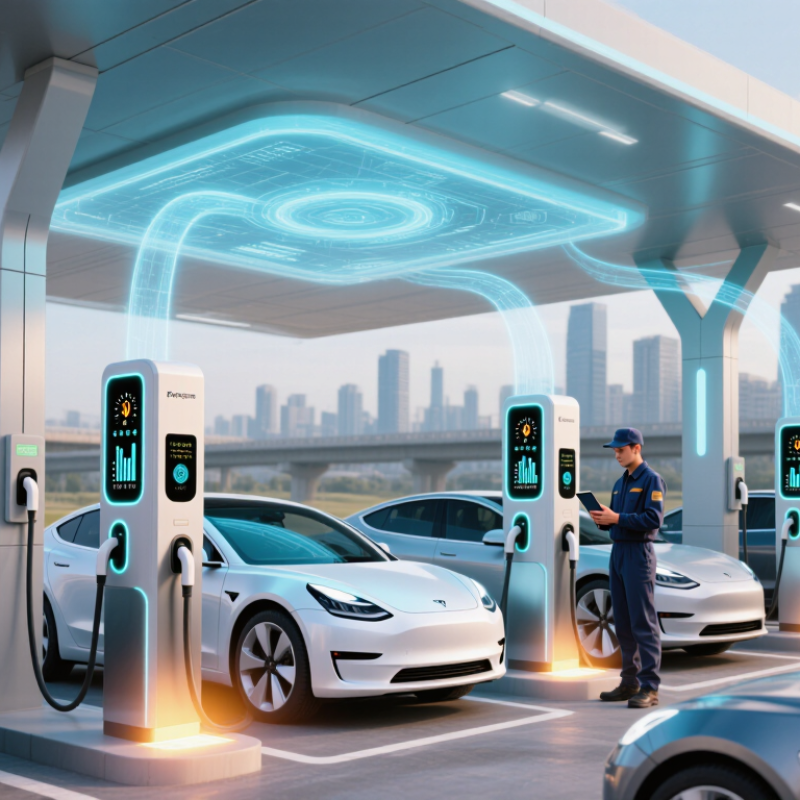
China’s EV market is expanding quickly, but charging availability alone does not guarantee dependable service. A station may look operational while its connector overheats, payment screen freezes, or network connection drops. This is where How IoT improves monitoring of EV charging stations becomes practically important. IoT sensors collect temperature, voltage, current, connector status, and energy-use data in real time. Operators can view that information from a central platform, even when stations are spread across busy cities, highways, and residential compounds.

Jörg Reich, an interoperability specialist associated with CharIN, has stated, “Interoperability is essential for convenient electric mobility.” His point matters in China, where different operators, vehicle brands, and payment systems must work together. IoT gateways can connect charging equipment with cloud dashboards, maintenance tools, and customer applications. Alerts can identify abnormal power changes before a complete failure occurs. Predictive maintenance may reduce truck rolls, shorten downtime, and improve driver confidence. Small signals matter.

Still, connected monitoring is not perfect. Sensor readings can drift. Rural networks may be unstable. Poorly integrated platforms can create duplicate alerts or incomplete records. These weaknesses deserve honest attention. Reliable monitoring needs calibrated devices, secure data transmission, clear access controls, and trained technicians who verify digital warnings on site. A dashboard is not a repair team. It is an early warning system. For China’s best EV charging stations, combining IoT visibility with human inspection can create safer, more transparent, and more responsive charging services.
China Best EV Charging Stations How IoT Improves Monitoring?

What Makes China a Leader in EV Charging Station Development

China’s leadership in EV charging station development comes from scale, speed, and coordinated planning. Large cities can test charging networks across busy roads, shopping areas, housing districts, and highway services. This creates practical data, not only policy reports. Dense manufacturing also lowers equipment costs and supports faster technical improvements.

IoT strengthens this advantage through continuous monitoring. Sensors track connector temperature, voltage, charging speed, and payment status. Cloud platforms can identify unusual heat before equipment fails. Technicians then receive alerts with location and fault details. In a well-managed station, a driver sees an available charger on a mobile map, arrives, and starts charging within minutes. Remote software updates can also improve safety settings without replacing the whole unit.

The model is not flawless. Some rural sites still face weak network coverage and uneven maintenance. Different charging standards can confuse users, especially during long-distance travel. These gaps deserve honest attention. Leadership should not mean building more stations alone. It should mean reliable uptime, clear information, accessible service, and responsible data protection. China’s strongest progress comes from combining public planning, private engineering, and real-time operational feedback. Yet operators must keep measuring failed sessions, waiting times, and customer complaints. Numbers can reveal progress, but they can also hide inconvenient problems.

China's EV Charging Stations: How IoT Improves Monitoring

China's rapid charging infrastructure expansion has increased the importance of connected monitoring, remote diagnostics, load management, and predictive maintenance.

Real-Time Visibility

IoT devices transmit charger status, utilization, power output, and fault alerts to centralized monitoring platforms.

Faster Maintenance

Remote diagnostics help operators identify abnormal temperature, communication, and power conditions before failures expand.

Smarter Energy Use

Connected data supports load balancing, charging-session analysis, and more efficient use of grid capacity.

Source: China Electric Vehicle Charging Infrastructure Promotion Alliance annual and monthly infrastructure statistics. Public charging facility figures are rounded to the nearest thousand.

Core IoT Technologies Used in EV Charging Stations

China Best EV Charging Stations: How IoT Improves Monitoring?

Core IoT Technologies Used in EV Charging Stations

China’s best EV charging stations are becoming connected energy assets, not isolated parking equipment. The International Energy Agency’s Global EV Outlook 2024 reports more than four million public chargers worldwide in 2023. This rapid expansion makes continuous monitoring essential.

IoT gateways collect voltage, current, temperature, connector status, and payment signals. Edge computing can process these readings beside the charger. It reduces delays when cloud connections weaken. MQTT and OCPP-based communication support secure data exchange between chargers and management platforms. Cellular networks, Wi-Fi, and private networks provide flexible connectivity across busy sites.

Cloud dashboards then display live charging sessions, energy use, fault codes, and maintenance alerts. A technician might see rising connector temperature before a session fails. Predictive models can identify unusual power drops or repeated authentication errors. The U.S. Department of Energy’s Alternative Fuels Data Center shows how public charging infrastructure requires clear, continuously updated location and operational information.

Cybersecurity also needs attention. Device certificates, encrypted communication, role-based access, and firmware controls reduce avoidable exposure. Yet no sensor is perfect. Dust, heat, poor calibration, and unstable signals can create false alarms. Operators should compare IoT readings with physical inspections and verified meter data. That practical feedback improves trust, although it can slow deployment. The technology is powerful, but careless data quality can still produce confident mistakes.

How IoT Enables Real-Time Charging Station Monitoring

China Best EV Charging Stations: How IoT Improves Monitoring

China’s charging network is expanding quickly. The International Energy Agency’s Global EV Outlook 2024 reported over 4 million public charging points worldwide by the end of 2023. China held nearly two-thirds of them. Such scale makes manual inspection slow, costly, and unreliable. IoT sensors can transmit voltage, current, connector temperature, cabinet status, and session data in real time. Operators can see a failing connector before drivers face a dark screen or interrupted charging. Small signals matter.

The benefits are practical. A cloud platform can identify abnormal heat, repeated payment failures, weak communication, or unusual power loss. Technicians then receive location-based alerts instead of checking every station physically. The IEA also noted that China added more than 2.5 million public chargers during 2023, showing why automated supervision is becoming essential. Real-time records can support maintenance planning and energy balancing. They can also reveal underused stations and congested sites.

IoT is not perfect. Sensors may drift, networks can fail, and poor data quality can create false alarms. A dashboard alone cannot repair equipment. Charging operators still need calibrated devices, secure data access, and trained field teams. This is where many projects need reflection. More data does not always mean better service. Clear alerts, tested procedures, and honest uptime records create the stronger charging experience.

China Best EV Charging Stations: How IoT Enables Real-Time Charging Station Monitoring

Monitoring Dimension IoT Data Collected Typical Reporting Interval Real-Time Indicator Operational Value
Charging Availability Connector status, reservation status, session state, and communication status 5–30 seconds Available, occupied, reserved, offline Improves user visibility and helps operators identify unavailable connectors quickly.
Output Power Voltage, current, charging power, energy delivered, and power-factor readings 1–10 seconds during a session Power output compared with the configured charging limit Supports load balancing, performance analysis, and detection of abnormal power delivery.
Energy Metering Cumulative kilowatt-hours, session energy, meter readings, and time-of-use records 15 seconds–5 minutes Energy delivered per connector and per charging session Enables accurate billing records, energy reporting, and site-level consumption analysis.
Charging Session Health Session start time, authentication result, charging duration, termination reason, and interruption history Event-driven with periodic updates Normal, interrupted, completed, rejected, or failed Helps identify failed starts, premature stops, and recurring customer-service issues.
Temperature Monitoring Power-module temperature, cable temperature, connector temperature, and cabinet temperature 5–30 seconds Normal, warning, derated, or shutdown condition Supports thermal protection and early detection of overheating or ventilation problems.
Electrical Safety Insulation status, residual-current protection, overvoltage, undervoltage, overcurrent, and ground-fault events Event-driven; immediate alarm transmission Safe, warning, or protection trip Allows rapid isolation of unsafe conditions and improves maintenance response.
Network Connectivity Signal strength, latency, packet loss, connection uptime, and last successful data transmission 30 seconds–5 minutes Connected, unstable, or offline Distinguishes communication failures from hardware failures and supports remote diagnostics.
Equipment Faults Fault codes, module status, relay condition, contactor status, and controller self-test results Event-driven; periodic health check Normal, degraded, or faulted Prioritizes service tickets and can reduce unnecessary on-site inspections.
Usage and Occupancy Session count, utilization time, idle time after charging, peak demand, and connector occupancy 1–15 minutes Occupancy rate and active connector count Supports capacity planning, queue management, and placement of additional charging equipment.
Remote Control and Recovery Remote restart status, firmware version, configuration changes, and recovery results On demand with audit logging Command pending, completed, or unsuccessful Enables controlled remote troubleshooting and reduces downtime caused by minor software or communication issues.
Environmental Conditions Ambient temperature, humidity, cabinet ventilation status, water ingress indication, and door status 1–5 minutes Within range, warning, or critical Improves protection against weather-related damage and helps schedule preventive maintenance.
Cybersecurity and Access Login events, certificate status, encrypted connection status, failed access attempts, and firmware integrity records Event-driven with daily health checks Secure, suspicious, or blocked Creates an audit trail and helps protect charging infrastructure from unauthorized access.

Data Security and Maintenance in Connected Charging Networks

China Best EV Charging Stations: How IoT Improves Monitoring?

Data Security and Maintenance in Connected Charging Networks

Connected charging stations can report voltage, temperature, connector status, and payment activity within seconds. In field inspections, this visibility helps technicians notice overheating before a cable becomes unsafe. Small details matter. A rising cabinet temperature at midnight may reveal blocked ventilation or a failing fan. Reliable systems encrypt data during transmission and storage. They also separate charging controls from customer information. This limits damage when one account or device is compromised.

Access should follow clear roles, not convenience. Operators need strong authentication, short session times, and detailed login records. Firmware updates should use signed packages and verified release channels. Network segmentation is equally important. A public Wi-Fi connection should never directly reach charging controls. Security logs require regular review, not just automatic collection. Otherwise, quiet warning signs can disappear inside thousands of routine events.

Maintenance teams can combine sensor alerts with physical checks. A technician may find dust around a cooling grille, even when software reports normal output. Predictive models are useful, but they sometimes produce false alarms. Human judgment still matters. Operators should test emergency stops, inspect cables, and compare digital readings with handheld instruments. Data retention also deserves restraint; keeping every record forever increases exposure and storage costs. Some procedures remain imperfect, and local rules or network conditions can change. Teams should document these gaps honestly and revise controls after incidents, failed updates, or unexpected charger behavior.

Future Trends for Smart EV Charging Infrastructure in China

China’s best EV charging stations will be judged by reliability, not only charging speed. The International Energy Agency reported that China held more than half of the world’s public charging points in 2023. This scale creates a difficult monitoring problem. IoT sensors can track connector temperature, voltage, current, queue length, and payment status in real time. Shorter faults. Faster repairs.

Future infrastructure will depend on predictive maintenance. A station can send an alert when cable resistance rises or cooling performance weakens. Operators can then inspect equipment before a driver faces a failed session. The China Electric Vehicle Charging Infrastructure Promotion Alliance reported more than 2.7 million public charging points by the end of 2023. Managing this network requires shared data standards, secure cloud platforms, and clear maintenance records.

The technology is promising, but data is not always truth. Poor sensors may create false alarms, while weak network coverage can hide a real fault. Charging sites should combine automated alerts with physical inspections and driver feedback.

Cybersecurity also needs continuous testing, especially when stations connect with vehicles, buildings, and electricity networks. Future designs may use edge computing to process urgent signals locally, reducing delay during peak demand. Yet China still needs stronger interoperability between different charging systems. Without it, an intelligent station may remain isolated. That is an expensive imperfection.

FAQS

Why has China become a leader in EV charging station development?

China combines large-scale planning, dense manufacturing, and fast deployment. Cities test chargers beside roads, housing areas, shopping centers, and highways. This creates practical operating data. Scale helps reduce equipment costs, but scale alone does not guarantee reliable service.

How does IoT improve charging station monitoring?

Sensors measure temperature, voltage, charging speed, connector status, and payment activity. Operators can view these details within seconds. A rising cabinet temperature at midnight may indicate blocked ventilation or a failing cooling fan. Small signals matter.

How can connected stations reduce charging failures?

Cloud systems can detect unusual heat, rising cable resistance, or weak cooling performance. Technicians receive alerts with the station location and fault details. They may inspect equipment before a driver begins charging. Predictive models help, but false alarms still occur.

What maintenance practices are important for charging stations?

Teams should combine software alerts with physical inspections. Technicians can test emergency stops, inspect cables, clean cooling grilles, and compare sensor readings with handheld instruments. Digital readings may look normal while dust blocks airflow. Human judgment remains necessary.

How should charging networks protect operational and customer data?

Systems should encrypt data during transmission and storage. Charging controls should remain separate from customer information. Access should use strong authentication, limited session times, and detailed login records. Public Wi-Fi should never directly reach charging controls.

Why are software updates important for connected chargers?

Remote updates can improve safety settings without replacing the entire unit. Updates should use verified packages and controlled release channels. Operators should review failed updates and unexpected charger behavior. A convenient update can still create problems.

What challenges affect charging development in rural areas?

Rural locations may have weak network coverage and uneven maintenance. Remote monitoring can miss faults when connectivity fails. Local inspections remain essential. The gap is real. Operators should report these limitations instead of hiding them behind network statistics.

Why is interoperability important for future charging infrastructure?

Different charging standards can confuse drivers during long-distance travel. Shared data standards could improve equipment communication and maintenance records. Without interoperability, an intelligent charger may remain isolated. That is an expensive imperfection.

How should operators measure charging network performance?

They should track uptime, failed sessions, waiting times, repair speed, and customer complaints. Numbers reveal patterns, but they can also hide inconvenient problems. A station may appear successful while drivers face repeated payment errors. Continuous review is needed.

What role may edge computing play in future charging stations?

Edge computing could process urgent signals locally during busy periods. This may reduce delays when cloud connections are slow. However, local processing does not remove cybersecurity or maintenance responsibilities. The technology is promising, not flawless.

Conclusion

China has become a leader in EV charging station development by combining strong electric vehicle demand, extensive infrastructure planning, and rapid advances in digital technology. Modern charging networks use IoT sensors, cloud platforms, wireless communication, smart meters, and edge computing to connect stations and collect operational data. How IoT improves monitoring of EV charging stations is evident through real-time tracking of charger status, energy consumption, charging duration, temperature, and equipment performance. Operators can quickly identify faults, manage availability, and improve the user experience.

Connected monitoring also supports predictive maintenance by detecting unusual conditions before they cause service interruptions. Secure data transmission, access control, encryption, and regular software updates help protect charging networks and customer information. Looking ahead, China’s smart charging infrastructure is likely to develop through greater automation, renewable energy integration, vehicle-to-grid interaction, intelligent load management, and more accurate demand forecasting, creating a safer, more efficient, and more flexible charging ecosystem.

Madeline

Madeline

Madeline is a dedicated marketing professional with a wealth of expertise in our company's core offerings. With a keen understanding of the industry, she brings a unique perspective to her role, consistently delivering high-quality content that highlights the superior aspects of our products. As......