Why charging speed matters for electric vehicles begins with a simple roadside moment. A driver arrives with 12% battery remaining. The next appointment starts in forty minutes. A slow charger may not provide enough energy before departure. A reliable fast charger can change the entire journey.
The International Energy Agency’s Global EV Outlook 2024 reported more than four million public charging points worldwide in 2023. Approximately 1.3 million new public chargers were added that year. However, charger numbers alone do not describe the user experience. Power output, vehicle charging limits, battery temperature, and station availability all affect real charging time. A 150-kilowatt charger may not deliver 150 kilowatts continuously. The battery may reduce power near high charge levels. That detail is often missed.
Carlos Tavares, former Stellantis chief executive, stated, “If you don't have charging infrastructure, you cannot sell electric cars.” His point also explains why charging speed matters for electric vehicles. Faster charging reduces waiting, supports longer trips, and makes electric vehicles easier to use for households without home charging. BloombergNEF’s Electric Vehicle Outlook 2024 also identified charging infrastructure as a key condition for continued EV adoption. Still, speed is not everything. A fast charger that is occupied, unreliable, or poorly located creates frustration. The best system combines high power, clear pricing, dependable operation, and convenient access. That sounds obvious. Real networks still fall short. This guide examines charging speed, measured power, practical charging times, and the trade-offs behind faster electric mobility.
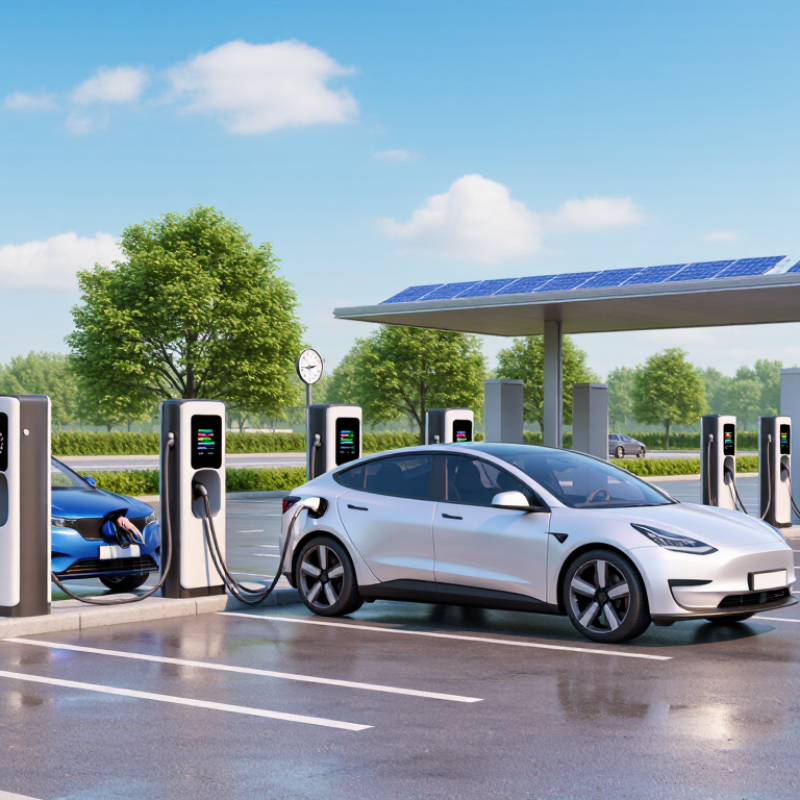
EV charging speed describes how quickly electricity enters an electric vehicle’s battery. It is usually measured in kilowatts, or kW. A higher kW rating can add more driving range in less time, but the number alone can mislead.
The vehicle, charger, battery temperature, and state of charge all affect the real result. For example, a 150 kW charger may not deliver 150 kW continuously. Charging often slows after the battery reaches about 80 percent. This protects battery health and controls heat. Cold weather can reduce speed too. I have seen charging sessions take much longer than expected on winter mornings, even beside a powerful charger.
Charging speed also depends on the connection type. Home alternating-current charging is usually slower but convenient overnight. Direct-current charging can be much faster during a road trip. A driver should compare added range per minute, not only the charger’s maximum output. A smaller battery may reach full charge sooner, while a larger battery may accept power for longer. That detail is easy to miss.
Fast charging is not always better. Frequent high-power sessions may increase heat and energy costs, depending on the vehicle and electricity plan. Check the vehicle manual, charging history, and local conditions. Real-world results will vary, sometimes more than expected.
EV charging speed describes how quickly an electric vehicle gains usable energy. It is usually measured in kilowatts, or kW. A higher kW rating can add more driving range each minute. However, charging speed is not the same as charging time. Time also depends on battery size, charging equipment, temperature, and the vehicle’s maximum acceptance rate.
For example, a 7 kW AC charger may deliver about 7 kilowatt-hours in one hour under suitable conditions. A 50 kW DC charger can deliver energy faster, but the rate often changes as the battery fills. Charging may slow noticeably beyond 80 percent to protect battery health. This means advertised speeds are useful references, not guaranteed results. Real measurements should record the starting battery level, ending level, outdoor temperature, and actual power delivered.
Tips: Compare charging speed in kW, not only minutes. Check the vehicle’s maximum charging rate before choosing equipment. Cold weather can reduce performance, sometimes considerably. A simple calculation helps: charging time roughly equals energy needed divided by charging power. Still, losses and changing power make the estimate imperfect. I once treated a charger’s maximum rating as a constant speed, and that assumption proved too optimistic. Reliability improves when figures come from independent tests or clear technical specifications.
EV charging speed is measured by power in kilowatts (kW). Higher power can transfer more energy in less time, although the actual rate also depends on the vehicle, battery temperature, battery state of charge, and charger limits.
The chart shows representative charging-power ranges commonly used for passenger EVs. Estimated driving range assumes an energy efficiency of 3 miles per kWh; real-world results vary by vehicle, weather, speed, and charging conditions.
Charging speed is the rate at which an electric vehicle gains usable energy. It is usually measured in kilowatts, but the car’s battery size also matters. A higher-power charger does not always mean faster charging. The vehicle must be able to accept that power, and its software may reduce the rate.
The charger’s output is only one part of the process. Battery temperature has a strong effect. A cold battery may charge slowly until it warms, while a very hot battery may receive limited power for protection. Charging often slows near a high state of charge, especially above 80 percent. This protects the battery and manages heat.
Cable quality, grid capacity, and shared electrical loads can also change the result. Two identical cars may show different speeds at different locations.
In practice, I have seen charging rates rise after a short drive, when the battery was warmer. A clear display helps drivers understand these changes. Still, charging estimates are not perfect. Weather, battery age, and recent driving can shift the timing. I once expected a quick session and underestimated a crowded site’s shared power. That mistake changed my planning. Checking the vehicle’s charging limit, arriving with a suitable battery level, and allowing extra time usually creates a more reliable experience. Battery condition matters too, although its effect is harder to judge during one visit.
EV charging speed describes how quickly electricity moves from a charger into a vehicle’s battery. It matters because charging time affects daily routines, long trips, and the size of public charging networks. However, speed is not the same as convenience. A slower charger near a home may be more useful than a faster charger several miles away.
Level 1 charging uses a standard household outlet and usually adds about 3–5 miles of range per hour, according to the U.S. Department of Energy’s Alternative Fuels Data Center. It suits overnight charging, but it feels painfully slow for high-mileage drivers.
Level 2 equipment uses higher-voltage service and commonly adds 10–60 miles per hour. It is widely used at homes, workplaces, apartments, and shopping locations. Installation quality matters. An overloaded circuit can reduce performance.
DC fast charging sends electricity directly to the battery system, avoiding the vehicle’s onboard charger. Many systems can add roughly 100 miles of range in 20–30 minutes, though results vary. The International Energy Agency reported that global public charging points exceeded 4 million by the end of 2023, with strong year-on-year growth. Yet peak speed often declines as the battery fills, especially above 80 percent. Battery temperature, vehicle limits, grid capacity, and charger sharing also matter. A clean speed chart can mislead. Real charging is messier, and drivers should plan around average performance, not the highest advertised number.
What Is EV Charging Speed and Why Does It Matter?
Charging speed shapes how easily an electric vehicle fits into daily life. A slow overnight session may be enough for commuting. A long-distance journey creates different pressures. Drivers may wait beside a charger with luggage, children, or a nearly empty battery. Time becomes part of the driving experience.
The International Energy Agency reported more than four million public charging points worldwide by the end of 2023. That number grew by about 40% in one year. More chargers help, but availability alone does not solve delays. The U.S. Department of Energy explains that Level 2 charging often adds roughly 3 to 25 miles of range per hour. Direct-current fast charging can add far more range within 30 minutes, depending on the vehicle and charger. Conditions matter.
Peak speed can mislead. A vehicle may accept its highest rate only briefly. Charging usually slows as the battery fills. Cold weather, battery temperature, and a busy site can reduce performance. I have noticed how easily drivers focus on the largest number. That is not always practical. A reliable 100-mile top-up during a short meal may matter more than an impressive maximum rate. Drivers should compare real charging curves, not just advertised peaks. The best choice depends on distance, routine, weather, and patience. Sometimes, patience wins.
| Charging Method | Typical Power Output | Approximate Range Added per Hour | Typical 10–80% Charging Time* | Best-Suited Use | Why Charging Speed Matters |
|---|---|---|---|---|---|
| Standard Household AC Outlet | 1.4–3.0 kW | 7–20 km (4–12 mi) |
Approximately 14–30 hours | Overnight charging, low daily mileage, and locations without dedicated charging equipment | It is widely available and inexpensive to use, but the low power output may not replace a full day of driving overnight. |
| Dedicated AC Charging | 3.7–22 kW | 20–140 km (12–87 mi) |
Approximately 2–12 hours | Homes, workplaces, apartments, hotels, and long parking periods | It provides a practical balance between installation cost and charging time. The vehicle’s onboard AC charger may limit the actual power it can accept. |
| DC Fast Charging | 50–150 kW | 250–750 km (155–465 mi) |
Approximately 20–60 minutes | Road trips, short stops, fleet turnaround, and urgent charging needs | It can restore substantial driving range during a brief stop, reducing travel delays and making longer journeys more convenient. |
| High-Power DC Charging | 150–350 kW | 750–1,750 km (465–1,087 mi) |
Approximately 15–30 minutes | High-traffic travel corridors, premium charging locations, and commercial fleets | It can minimize charging stops, but the vehicle must support the available power and the charging station must have sufficient grid capacity. |
Charging speed shows how quickly a vehicle gains usable energy. It is measured in kilowatts, or kW. Higher kW can add range faster.
No. Charging time also depends on battery size, temperature, equipment, and vehicle limits. A high-power charger may not deliver its maximum rate continuously.
Level 1 charging uses a standard household outlet. It usually adds about 3–5 miles of range per hour. It suits overnight charging.
Level 2 charging commonly adds about 10–60 miles per hour. It fits homes, workplaces, apartments, and shopping locations. Installation quality matters.
Many DC fast chargers can add roughly 100 miles in 20–30 minutes. Results vary with battery temperature, vehicle limits, and charger capacity.
The vehicle often reduces power as the battery fills. This helps manage battery stress and temperature. The final portion may feel surprisingly slow.
Yes. Cold batteries can accept power more slowly. A winter charging session may take considerably longer than the same session in mild weather.
Compare power in kW, charging curves, and real testing results. Record starting charge, ending charge, temperature, and delivered power. Maximum ratings can mislead.
Roughly divide energy needed by charging power. The estimate remains imperfect because charging losses and power changes occur. My first estimate was too optimistic.
EV charging speed describes how quickly an electric vehicle can receive energy and how much driving range it gains during a charging session. It is commonly measured in kilowatts, while actual charging time depends on the vehicle’s battery capacity, charging limits, battery temperature, and the available power supply. Charging speed may also change during a session, often slowing as the battery approaches full capacity to protect battery health.
Different chargers provide different levels of power, from slower home charging to faster public options designed for longer trips. The vehicle’s onboard charging system, the charger’s output, weather conditions, battery state of charge, and shared electrical demand can all affect performance. Understanding Why charging speed matters for electric vehicles helps drivers choose suitable charging equipment, plan journeys more confidently, reduce unnecessary waiting, and make better use of their vehicle. Although faster charging can improve convenience, drivers should also consider cost, accessibility, battery care, and their everyday travel needs when selecting a charging solution.

Greenvora Charger