Why Networked EV Chargers Enhance Accessibility for All?

Time:2026-05-28 Author:Charlotte
0%

As electric vehicle (EV) adoption accelerates, charging infrastructure must evolve. Networked EV chargers play a critical role in enhancing accessibility for all users. According to the International Energy Agency, global EV sales increased by 54% in 2021, highlighting the urgent need for efficient charging solutions.

Why networked EV chargers improve accessibility is evident in their ability to provide real-time data and location services. These chargers connect to networks, allowing drivers to find nearby stations easily. A study from McKinsey reveals that access to charging infrastructure is a significant barrier for 70% of potential EV buyers. Networked chargers address this concern by ensuring a broad distribution of charging points.

Despite the progress, challenges remain. Not all regions have equal access to networked chargers. Rural areas may still lack sufficient infrastructure. More investment and planning are needed to ensure equitable access for all communities. Addressing these disparities is crucial for promoting widespread EV usage.
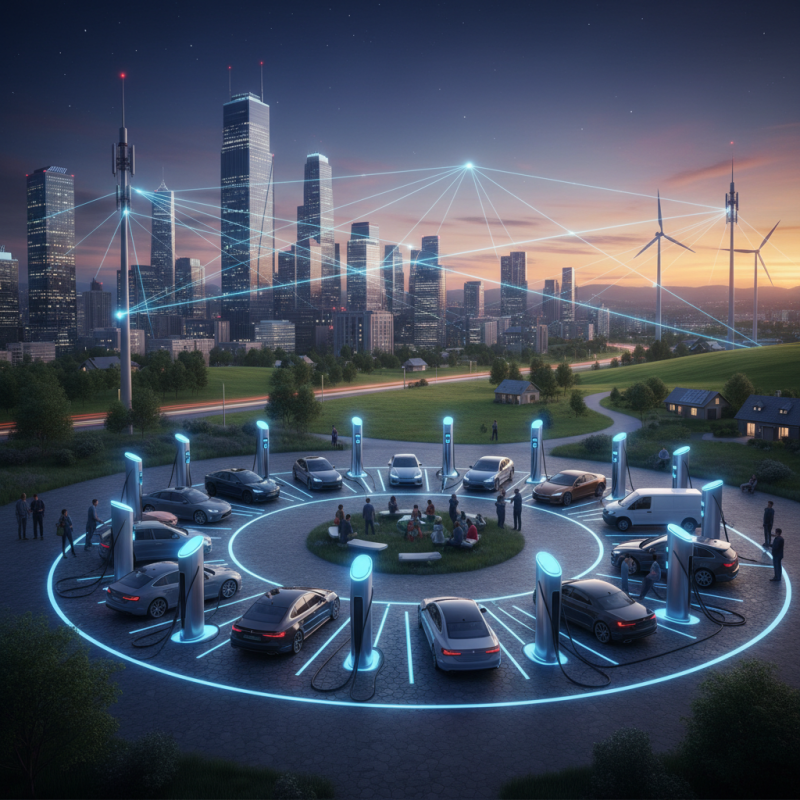
Why Networked EV Chargers Enhance Accessibility for All?

The Importance of Accessibility in Electric Vehicle Charging Solutions

Accessibility in electric vehicle (EV) charging solutions is crucial for broad adoption. Many people still face barriers when charging their vehicles. This includes individuals with disabilities, the elderly, and those living in urban areas without easy access to charging stations. When chargers are networked, they can be strategically placed in locations that prioritize these users.

Consider public spaces where EV chargers are situated. Many are not designed with accessibility in mind. Narrow pathways and poor signage can hinder access. Networked chargers can gather data to determine where these deficiencies exist. This data can help improve their placement and information availability. Ensuring easy access to these stations creates a more inclusive environment.

Social equity plays a role as well. Not every community has equal access to charging infrastructure. By enhancing the reach of networked chargers, communities can bridge these gaps. It’s a work in progress, and reflection is necessary on current systems. Are we really meeting the diverse needs of EV users? Only through collaboration and adaptive strategies can we make significant strides in accessibility.

Electric Vehicle Charger Accessibility by Region

This chart illustrates the accessibility index of electric vehicle chargers across different regions. Urban areas enjoy higher accessibility due to better infrastructure, while rural areas face significant challenges. Addressing these disparities is crucial to enhance overall accessibility for electric vehicle users.

Understanding Networked EV Chargers: Definition and Functionality

Networked EV chargers are crucial for promoting accessibility in electric vehicle (EV) charging. These chargers connect to the internet, enabling real-time data sharing and enhanced user experience. Users can easily locate available chargers through apps or platforms, ensuring a smoother travel experience.

These chargers typically offer multiple functionalities. They can adjust pricing based on demand or provide reminders about charging sessions. This adaptability improves convenience for users, but it does raise questions about fairness in pricing. Not everyone will have the same access to technology or information. Moreover, the connectivity can sometimes lead to technical issues. If the network goes down, users may find themselves without charging options.

Accessibility can also be influenced by charger locations. If chargers are mostly placed in affluent areas, underserved communities may struggle to find them. Networked chargers should be strategically deployed to ensure equity. Efforts to prioritize installation in less privileged zones are necessary. This would make EVs truly accessible for everyone, regardless of their socioeconomic background.

Why Networked EV Chargers Enhance Accessibility for All?

Charger Type Charging Speed (kW) Accessibility Features Network Availability Location Types
Level 1 Charger 1.2 kW Basic accessibility Limited Residential, public parking
Level 2 Charger 7.2 kW Enhanced accessibility with user-friendly interfaces Moderate Shopping centers, workplaces
DC Fast Charger 50-150 kW Full accessibility with quick response Extensive Highways, major transport hubs
Wireless Charger Varied Seamless integration for disabled users Growing Home, specific public areas
Smart Charger Up to 22 kW Remote access, voice commands Widespread Urban installations, workplaces

How Networked EV Chargers Improve Access for Diverse Communities

Networked electric vehicle (EV) chargers are reshaping the landscape of accessibility in diverse communities. Research indicates that about 30% of households in underserved areas lack adequate access to charging infrastructure. By connecting chargers to a centralized network, these facilities provide real-time data, improving accessibility for all users, particularly in rural and low-income neighborhoods. This enhanced connectivity can lead to a 25% increase in charger utilization rates, making EV ownership more feasible for diverse populations.

Moreover, networked chargers offer benefits like location tracking and advanced reservation systems. This means users can plan their charging needs effectively, reducing range anxiety. A 2022 report from the International Energy Agency confirmed that public charging stations are crucial for increasing EV adoption. They found that regions with robust networks saw a 40% higher rate of EV registrations compared to those lacking such infrastructure. However, it's essential to reflect on the digital divide; not all communities have equal access to smart technologies that facilitate networked charger usage.

Incorporating features like multilingual interfaces can further enhance usability. Studies show that user-friendly technologies can increase charge point access for non-English speakers, who often face barriers. The goal remains to ensure that every community benefits equally from the shift towards electric mobility, recognizing that disparities still exist. Addressing these issues head-on is crucial for a truly inclusive EV future.

The Role of Technology in Enhancing EV Charger Accessibility

The integration of technology into electric vehicle (EV) charging infrastructure significantly boosts accessibility. As of 2022, a report from the International Energy Agency noted that global EV sales rose by 108%, highlighting the need for sufficient charging options. However, many regions still face a shortage of accessible charging stations. Networked EV chargers can bridge this gap by providing real-time data about charger availability and location. This technology allows EV users to plan their charging stops efficiently.

Data from the U.S. Department of Energy indicates that over 80% of EV charging occurs at home. Yet, for urban dwellers without dedicated parking, accessibility remains a challenge. Smart networks can help find optimal charging locations, reducing range anxiety. While some innovations are in place, not every area benefits equally from this technology. Rural regions often lack the infrastructure seen in urban environments. Addressing these discrepancies requires continuous refinement and investment in smart grid technology.

A 2021 study from McKinsey showed that urban charging hubs could reduce costs by 15%. This evidence suggests that investment in technology not only enhances accessibility but also mitigates the growing pains of the EV market. However, implementation still faces hurdles. Many public charging stations need better user experience design and transparency on charger status. This experience must evolve to truly meet the needs of all EV users.

Case Studies: Successful Examples of Networked EV Charging Systems

The implementation of networked electric vehicle (EV) charging systems is transforming accessibility. Case studies from various cities show the positive impact of these systems. For instance, a report by the International Energy Agency (IEA) reveals that cities with comprehensive charging networks see a 30% increase in EV adoption rates. This statistic underscores the effectiveness of connectivity in enhancing user experience.

In San Francisco, a network of smart chargers was established. These chargers can communicate with users, providing real-time availability and reservation features. The data indicates that charging stations with these capabilities face fewer downtime issues. However, barriers still exist. Some neighborhoods struggle with insufficient chargers, highlighting the need for equitable distribution.

Another case in Amsterdam showcases a cooperative approach. Local governments and private entities collaborated to deploy charging stations in underserved areas. Over 45% of users reported improved access to charging facilities. Despite these successes, a noticeable gap remains in rural regions. Addressing this imbalance is crucial for broadening EV acceptance. Continuous efforts in network expansion and innovation are essential to ensure all demographics benefit from EV technology.

FAQS

: What is a networked EV charger?

: A networked EV charger connects to a centralized system for real-time data and enhanced accessibility.

How do networked chargers improve accessibility?

They provide location tracking and a reservation system, reducing range anxiety for users.

What percentage of underserved households lack charging access?

Research shows that 30% of households in underserved areas lack adequate charging infrastructure.

What impact do charging networks have on EV adoption?

Cities with robust charging networks see a 40% higher rate of EV registrations.

How can networked chargers help non-English speakers?

Features such as multilingual interfaces can improve access for users who don't speak English.

What challenges still exist with charging infrastructure?

Some neighborhoods lack sufficient chargers, showing the need for better distribution.

What's an example of a successful networked charging system?

San Francisco's smart chargers provide real-time availability and face fewer downtime issues.

What collaborative approach was taken in Amsterdam?

Local governments and private entities worked together to deploy chargers in underserved areas.

Why is addressing the digital divide important?

Not all communities have equal access to smart technologies, which limits charger usage.

What ongoing efforts are needed for inclusivity in EV adoption?

Continuous network expansion and innovation are essential to benefit all communities equally.

Conclusion

The article "Why Networked EV Chargers Enhance Accessibility for All?" explores the critical role of accessibility in electric vehicle charging solutions, emphasizing the importance of extending charging infrastructure to underserved communities. By defining and detailing the functionality of networked EV chargers, the article highlights how they provide reliable access to electric vehicle charging, ensuring that diverse populations, including those in urban and rural areas, can benefit from EV technology.

Furthermore, the piece examines the technological advancements that contribute to enhanced accessibility in EV charging networks, illustrating this with case studies of successful implementations. These examples demonstrate how networked EV chargers improve accessibility by offering features like real-time availability updates, payment flexibility, and user-friendly interfaces. Ultimately, the article underscores why networked EV chargers improve accessibility, paving the way for a more inclusive and sustainable transportation future.

Charlotte

Charlotte

Charlotte is a seasoned marketing professional with a deep understanding of the company's portfolio and a passion for elevating its presence in the market. With a keen eye for detail and a commitment to excellence, she ensures that our professional blog is regularly updated with insightful articles......