As the demand for commercial vehicles grows, efficiently managing their charging solutions becomes crucial. Many fleet operators struggle with how to optimize charging for commercial vehicles. This not only affects operational efficiency but also the overall sustainability of the fleet.
Understanding the diverse charging needs is essential. Different vehicles have varying power requirements and usage patterns. Failures in optimizing charging can lead to increased downtime and higher costs. Fleet managers must assess the capabilities of their current infrastructure.
It's important to consider factors like charging speed and location. Some fleets may benefit from fast charging stations, while others might find overnight charging sufficient. The goal is to ensure vehicles are always ready without incurring unnecessary expenses. Analyzing usage data will provide valuable insights. This reflection is vital for creating a tailored plan that maximizes both efficiency and cost-effectiveness.
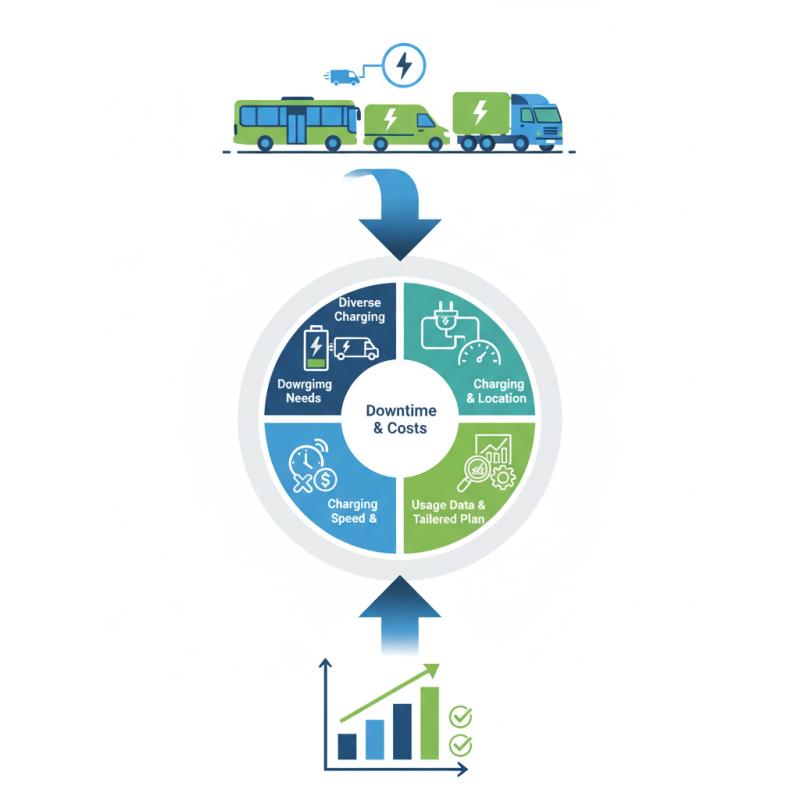
Understanding the charging needs of commercial vehicles is crucial for optimizing their performance. These vehicles often have diverse requirements depending on their size, purpose, and operational patterns. For instance, delivery vans typically need fast charging solutions to minimize downtime. On the other hand, larger trucks may benefit from longer charging periods without hindering their schedules.
When designing charging solutions, consider the average daily mileage. Many commercial vehicles may return to a central depot at the end of the day. This offers a unique opportunity to deploy overnight charging stations. It allows for full battery replenishment, enhancing operational efficiency.
Tips: Ensure that the charging infrastructure is scalable. As fleet sizes grow, so do the charging demands. Incorporate smart charging technologies to monitor usage patterns. This will help in predicting when and how much charging is required. Regular feedback from drivers can also highlight areas for improvement in charging stations.
Ultimately, understanding the specific needs of commercial vehicles leads to more efficient and reliable charging solutions. Evaluate current charging practices and seek ways to enhance convenience.
When considering charging solutions for commercial fleets, it's crucial to examine the various options available. Electric vehicle (EV) charging can be categorized into different types: Level 1, Level 2, and DC fast charging. Each type serves unique needs, depending on fleet size and operation schedules.
Level 1 charging, while widely accessible, is often impractical for large-scale operations. It provides about 4-5 miles of range per hour. For most commercial vehicles requiring higher turnover, Level 2 charging stations, which can deliver 10-20 miles of range per hour, are essential. According to a recent industry report, over 80% of commercial fleets are adopting Level 2 networks to minimize downtime.
DC fast charging offers the quickest option, providing up to 200 miles of range within 30 minutes. However, this efficiency comes at a higher installation cost and infrastructure demand. The Society of Automotive Engineers suggests that more than 60% of flagship fleets could benefit from integrating DC fast chargers to enhance operational productivity. Yet, this rapid solution requires careful planning to ensure alignment with existing power grids and site readiness.
Optimizing these charging solutions is not merely about cost; it also involves understanding the fleet's unique operations. Operators need to evaluate vehicle usage patterns and charging infrastructure. Lack of integration may lead to underutilized assets or overcapacity. Continuous reassessment will ensure the right balance between cost, efficiency, and sustainability.
Charging efficiency in commercial settings is vital for the success of electric vehicle adoption. Many factors impact this efficiency, including equipment compatibility, energy management, and power supply reliability.
One significant aspect is the charging infrastructure itself. Different chargers have varying power outputs. Choosing the right charger for a vehicle’s specifications can enhance charging times. However, not all facilities have upgraded systems, which can lead to inefficiencies. Moreover, the integration of smart technology can optimize power distribution. This allows for better energy management but requires investment and training for staff.
The timing of charging sessions plays a role as well. Off-peak hours can reduce costs and strain on the grid. Yet, many businesses may overlook this opportunity, leading to unnecessary expenses. Finally, ensuring regular maintenance of charging stations is crucial. Neglected equipment often results in malfunctions, which can hinder charging efficiency. Businesses must address these challenges comprehensively to improve overall operations.
Integrating renewable energy sources into charging solutions for commercial vehicles presents unique challenges and opportunities. Solar panels can provide energy during the day, while wind turbines can harness gusts to generate power. These sources help reduce dependence on fossil fuels. However, the intermittency of renewable energy makes it essential to have efficient storage solutions in place. Battery systems should be reliable and capable of handling various load demands.
Moreover, the initial investment in renewable systems can be daunting. Companies must evaluate the long-term benefits versus short-term costs. The learning curve for optimal technology integration can be steep. Stakeholders may face regulatory hurdles and need to navigate grid connection issues. This requires thorough research and professional input to ensure successful implementation.
Strategically located charging stations can maximize efficiency. They should align with existing transportation routes and energy availability. This approach might necessitate collaboration with local energy providers to enhance grid stability. Transitioning to renewable energy for charging solutions not only supports sustainability but also drives innovation in commercial vehicle operations. However, continuous adaptation and an open mindset among stakeholders are crucial for progress in this evolving landscape.
Charging solutions for commercial vehicles are evolving rapidly. Evaluating the cost-effectiveness of different charging strategies is crucial for optimizing operations. A report from the International Energy Agency (IEA) indicates that the total cost of ownership (TCO) can vary significantly depending on the charging method employed. For example, DC fast chargers can reduce downtime, but they often come with higher installation costs.
Tips: Consider the total cost of ownership when evaluating charging options. Look beyond initial investment.
In a study by the U.S. Department of Energy, companies that implemented a mixed charging strategy saved up to 30% on energy costs. However, not all strategies yield the same results. Businesses must analyze their specific usage patterns. Factors such as route planning and vehicle type play a significant role in determining the best charging approach.
Tips: Analyze vehicle usage to find the most efficient charging times and methods.
Despite advancements, challenges remain. As charging infrastructure expands, some areas still lag. According to a 2022 report, more than 50% of commercial fleets operate in regions with limited charging options. This lack of accessibility can hinder the full benefits of electric vehicles. Stakeholders should evaluate local infrastructure before making decisions.
Tips: Engage with local authorities to understand regional charging infrastructure developments.
| Charging Strategy | Infrastructure Cost ($) | Operating Cost per Charge ($) | Charge Time (hours) | Energy Efficiency (%) | Total Cost over 5 Years ($) |
|---|---|---|---|---|---|
| Level 2 AC Charging | 15,000 | 3.00 | 4 | 85 | 40,000 |
| DC Fast Charging | 100,000 | 10.00 | 1 | 90 | 200,000 |
| Wireless Charging | 200,000 | 8.00 | 3 | 88 | 155,000 |
| Solar-Powered Charging | 80,000 | 5.00 | 6 | 80 | 45,000 |
: The main types are Level 1, Level 2, and DC fast charging, each serving unique operational needs.
Level 1 charging provides only 4-5 miles of range per hour, which is insufficient for high turnover needs.
Level 2 delivers 10-20 miles of range per hour and is widely adopted to minimize vehicle downtime.
DC fast charging offers up to 200 miles of range in just 30 minutes, enhancing productivity despite higher costs.
Charging infrastructure compatibility, energy management, and power supply reliability all significantly impact charging efficiency.
Smart technology optimizes power distribution, but requires training and investment for effective implementation.
Charging during off-peak hours can reduce costs and alleviate grid strain, yet many miss this opportunity.
Neglected charging equipment can malfunction, leading to inefficiencies and hindering overall operational effectiveness.
Analyzing usage patterns and considering total cost of ownership helps determine the most effective charging strategy.
Over 50% of commercial fleets operate in areas with limited charging options, restricting electric vehicle benefits.
In exploring "How to optimize charging for commercial vehicles," it is essential to first understand the specific charging needs of various commercial vehicle types. This includes assessing factors such as vehicle range, battery capacity, and operational schedules. Different charging solutions are available for commercial fleets, such as fast charging stations and smart grid integration, each offering unique benefits and considerations for efficiency.
Additionally, factors influencing charging efficiency in commercial settings include the installation location, charging infrastructure, and user behavior. Incorporating renewable energy sources can further enhance the sustainability of charging practices, reducing reliance on fossil fuels. Finally, evaluating the cost-effectiveness of different charging strategies helps businesses make informed decisions, balancing upfront investment against long-term operational savings. This comprehensive approach is crucial for optimizing charging solutions tailored to the specific demands of commercial vehicles.

Greenvora Charger