Why Public EV Chargers Matter for City Infrastructure?

Time:2026-05-03 Author:Aria
0%

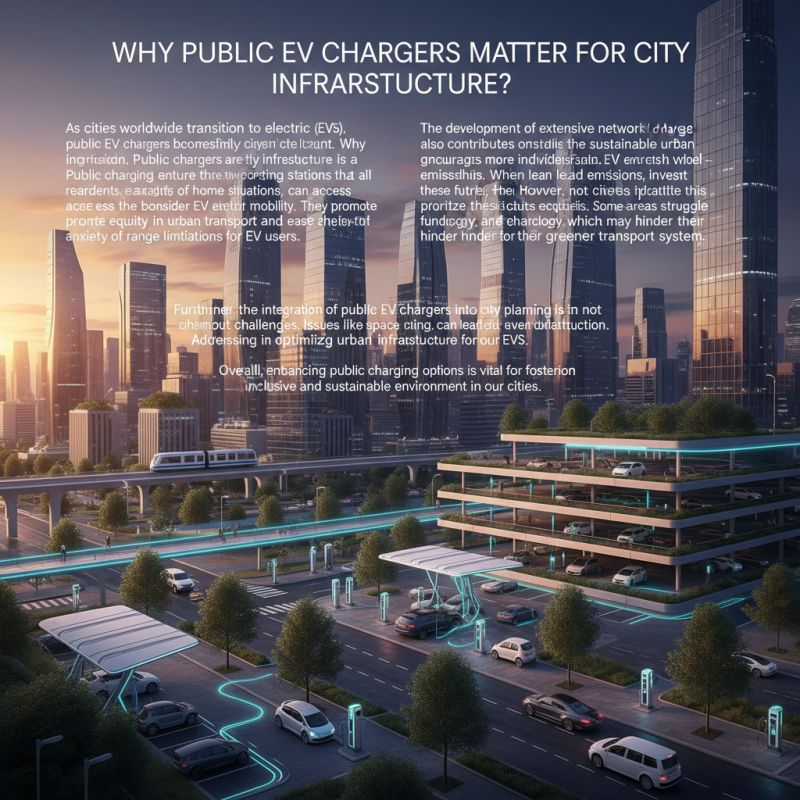
As cities worldwide transition to electric vehicles (EVs), the role of public EV chargers becomes increasingly significant. Why public EV chargers are important for city infrastructure is a question that needs urgent attention. Public charging stations ensure that all residents, regardless of their home situations, can access the benefits of electric mobility. They promote equity in urban transport and ease the anxiety of range limitations for EV users.

The development of an extensive network of public EV chargers also contributes to sustainable urban growth. It encourages more individuals to consider EV ownership, which can lead to reduced emissions. When cities invest in these chargers, they invest in their future. However, not all cities prioritize this infrastructure equally. Some areas struggle with inadequate chargers, which may hinder their transition to a greener transport system.

Furthermore, the integration of public EV chargers into city planning is not without challenges. Issues like space constraints, funding, and technology can lead to uneven distribution. Addressing these gaps is crucial in optimizing urban infrastructure for EVs. Overall, enhancing public charging options is vital for fostering an inclusive and sustainable environment in our cities.
Why Public EV Chargers Matter for City Infrastructure?

The Role of Public EV Chargers in Sustainable Urban Development

Public EV chargers play a vital role in sustainable urban development. Cities are rapidly transforming to accommodate electric vehicles. Easy access to charging stations encourages more residents to shift away from fossil fuel use. This shift is essential for reducing urban air pollution and carbon emissions.

Moreover, public EV chargers help enhance city infrastructure. They promote investment in renewable energy sources. With more charging stations, cities become more attractive to eco-conscious residents and businesses. However, the placement of these chargers needs careful planning. Some neighborhoods may have limited access, leading to inequality in infrastructure development. A well-distributed network of chargers ensures that all citizens benefit equally.

Despite the benefits, challenges remain. Maintenance of charging stations often suffers, leading to fewer operational units. City planners must address these issues to maximize the impact of public electric vehicle chargers. Strategically located and well-maintained chargers can support a truly sustainable urban environment. To thrive, cities need to continually reflect on their EV infrastructure strategies.

Why Public EV Chargers Matter for City Infrastructure?

City Number of Public EV Chargers Percentage of EVs in City Fleet Metrics of Air Quality Improvement Reduction in Carbon Emissions (Annual)
City A 250 15% Improved by 10% 500 tons
City B 400 20% Improved by 12% 800 tons
City C 150 10% Improved by 8% 300 tons
City D 350 25% Improved by 15% 600 tons
City E 300 18% Improved by 11% 700 tons

Benefits of Public EV Charging Stations for City Residents

Public EV charging stations play a crucial role in enhancing urban life for residents. Their presence makes electric vehicle ownership more feasible. Charging stations can be found in various locations, ensuring that everyone has access to efficient charging. This convenience encourages more people to switch from gasoline cars to electric vehicles.

The environmental benefits of public charging stations can't be overlooked. They help reduce air pollution and greenhouse gas emissions. Cleaner air leads to healthier communities. Moreover, these stations can stimulate local economies. Increased foot traffic around charging stations can benefit nearby shops and restaurants.

However, many cities still face the challenge of insufficient infrastructure. Not all neighborhoods have equal access to charging facilities. This may create a divide among residents based on income levels. Increased public awareness and investment in equitable access are essential. Policymakers must prioritize the expansion of public EV infrastructure in underserved areas.

This approach can contribute to a more sustainable future for everyone.

Integration of EV Chargers into Existing Infrastructure

Integrating electric vehicle (EV) chargers into city infrastructure is crucial for urban development. Cities are facing increased pressures from pollution and traffic. Public EV chargers can significantly reduce emissions and promote cleaner air. However, the challenge lies in blending these chargers seamlessly into existing infrastructure.

Many cities already have limited space. Balancing parking needs and EV chargers can be difficult. It's vital to assess current roadways and parking lots. Creative solutions, such as using street light poles, are emerging but may not be enough. Cities must ensure these chargers are accessible without disrupting daily life.

Additionally, urban planners must consider equity. Not all neighborhoods have equal access to EV chargers. Prioritizing installations in underserved areas can bridge this gap. This approach fosters inclusivity and supports broader adoption of electric vehicles. It’s essential for city infrastructure to evolve, reflecting the changing transportation landscape. However, careful planning and community input are necessary to avoid potential pitfalls.

Challenges in Implementing Public EV Charging Networks

As cities increasingly embrace electric vehicles (EVs), the roll-out of public EV charging networks faces several challenges. Many urban areas lack the necessary infrastructure. This creates gaps in accessibility for EV owners. Without ample charging stations, drivers may hesitate to switch from gasoline vehicles. This hesitation can slow the shift toward sustainable transportation.

Implementing public EV chargers involves more than just installation. Cities must navigate complex zoning laws and utility regulations. Finding optimal locations for charging stations is also critical. Areas with high traffic flow are ideal, but this may conflict with local businesses. Balancing community needs with infrastructure demands is a constant struggle.

Funding is another obstacle. Many cities operate with tight budgets, and public charging networks require significant investment. Collaborations with private entities can help, but they introduce new considerations. Public trusts may not always align with profit-driven motives. Building a reliable network means addressing these diverse interests while ensuring equitable access for all users.

Future Trends in Public EV Charging and Urban Planning

The future of urban planning hinges on the integration of public EV chargers. According to a recent report by the International Energy Agency, global electric vehicle sales surged to over 10 million units in 2022. This growth highlights the necessity for cities to develop robust charging infrastructure.

Cities face challenges in meeting this demand. Many urban areas struggle with space and funding for charging stations. A study from the American Council for an Energy-Efficient Economy suggests that approximately 50% of vehicles in urban areas will be electric by 2030. This statistic underscores the urgency for effective planning and deployment of charging stations amid existing infrastructure constraints.

Public charging stations also present an opportunity for economic growth. A report from the U.S. Department of Energy indicates that every public charger installed can facilitate up to $15,000 in annual economic activity. However, many municipalities still lack the strategic policies needed for widespread adoption. Urban planners must balance the demand for chargers with urban aesthetics and existing land use. Experimentation with innovative charging solutions, such as curbside chargers or fast-charging pods, may be essential for future-proofing city infrastructure.

FAQS

: Why are public EV charging stations important for city residents?

: They make electric vehicle ownership feasible and encourage people to switch from gasoline cars.

How do public charging stations benefit the environment?

They reduce air pollution and greenhouse gas emissions, leading to healthier communities.

What impact can charging stations have on local economies?

Increased foot traffic can benefit nearby shops and restaurants, stimulating local business.

Are all neighborhoods equally served by EV charging stations?

No, many areas lack adequate access, creating an income-based divide among residents.

What is needed to improve access to charging facilities?

Increased public awareness and investment in EV infrastructure in underserved areas are essential.

How can EV chargers be integrated into existing city infrastructure?

Creative solutions, like using street light poles, can help fit chargers without disrupting daily life.

What must urban planners consider when installing EV chargers?

Equity in access and community needs are vital to ensure all neighborhoods benefit.

What challenges do cities face with current EV charging installations?

Limited space and balancing parking needs with charger placements are significant hurdles.

Is planning for EV chargers straightforward?

No, it requires careful planning and community input to avoid potential issues.

What does the future of urban infrastructure need to reflect?

It should evolve to meet changing transportation landscapes and community needs effectively.

Conclusion

Public electric vehicle (EV) chargers play a crucial role in sustainable urban development, addressing the growing need for eco-friendly transportation solutions. Why public EV chargers are important for city infrastructure lies in their ability to support city residents by promoting electric vehicle adoption, reducing greenhouse gas emissions, and improving air quality. Moreover, integrating these charging stations into existing infrastructure can enhance the overall efficiency of urban planning and development.

However, the implementation of public EV charging networks comes with challenges such as space limitations, funding, and ensuring equitable access across diverse neighborhoods. As cities continue to evolve, future trends indicate that advancements in technology, urban design, and policy will further enhance the role of public EV chargers, making them an integral part of sustainable and resilient city infrastructures.

Aria

Aria

Aria is a dedicated marketing professional with a deep passion for innovative strategies and a keen understanding of our company's product offerings. With a wealth of experience in the industry, Aria excels at crafting engaging content that highlights the unique features and benefits of our......