The increasing demand for electric vehicles (EVs) highlights the importance of efficient charging solutions. Consumers often wonder, "How fast can ultra-fast DC chargers charge a vehicle?" This question is crucial as charging speed directly impacts the convenience of EV ownership. Ultra-fast DC chargers are designed to deliver high power, significantly reducing charging times compared to conventional charging stations.
These chargers can provide up to 350 kW of power, enabling EVs to gain substantial range in mere minutes. For instance, some vehicles can reach 80% charge in around 20-30 minutes, making long trips more feasible. However, not all electric vehicles are compatible with ultra-fast DC charging. Variations in battery capacity and thermal conditions can also affect charging performance.
While ultra-fast DC chargers promise quick top-ups, factors like battery health and charger availability remain important to consider. Some users may find themselves waiting for a charger to be free. Therefore, understanding how these chargers work is vital. It can help EV owners better plan their journeys and manage their recharging needs effectively.
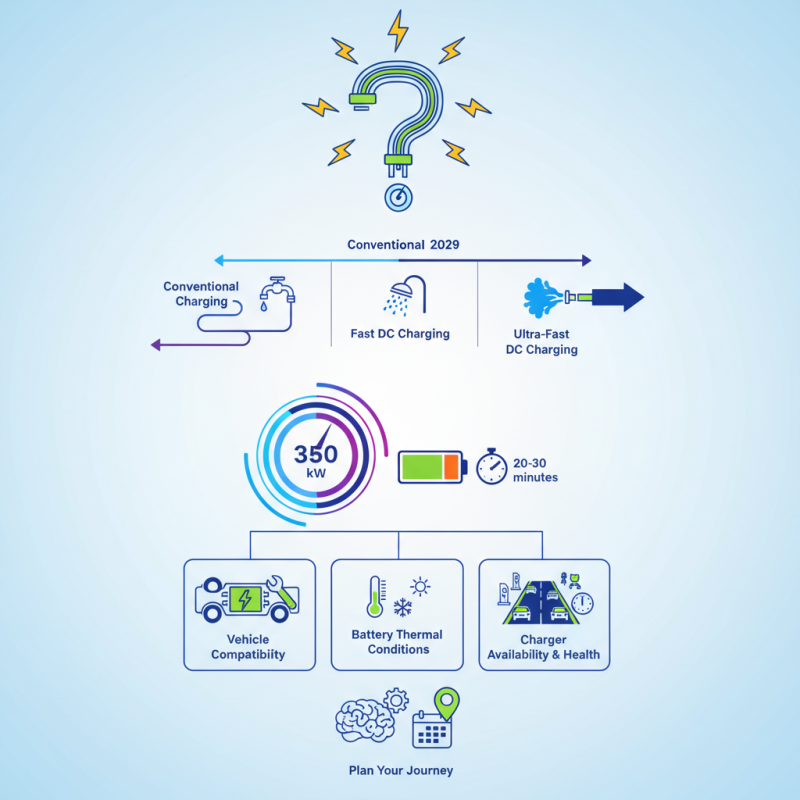
Ultra fast DC charging technology is revolutionizing the electric vehicle landscape. These chargers can deliver up to 350 kW of power. When connected, they can significantly reduce charging time. For example, a typical EV battery can gain about 80% charge in just 20 to 30 minutes. This speed is essential for long-distance travel. Drivers no longer need to wait for hours.
However, there are challenges to consider. Ultra fast DC chargers require advanced infrastructure, which is not widely available yet. Not every electric vehicle is compatible with such high charging rates. Some might only accept lower power, resulting in longer wait times. It’s crucial for consumers to understand their vehicle’s charging capabilities.
Moreover, fast charging can impact battery lifespan. Regular use of ultra fast chargers may lead to increased wear on the battery over time. Balancing charging speed and battery health is vital for owners. As technology advances, finding this balance will become increasingly important. Understanding these aspects will help users make informed decisions about their charging habits.
This chart illustrates the charging speeds of various electric vehicle models using ultra fast DC chargers. The data highlights the time taken (in minutes) to charge from 0% to 80% under optimal conditions.
The charging speed of electric vehicles (EVs) depends on several key factors. One significant factor is the power output of the charger. Ultra-fast DC chargers can provide high power levels, but the vehicle must be equipped to handle that power. If the vehicle's battery management system limits the intake, charging speed will drop. Therefore, not all EVs can benefit equally from ultra-fast chargers.
Temperature plays a crucial role as well. Batteries perform optimally within specific temperature ranges. Extreme cold or heat can slow down the charging process. For instance, a battery may charge slower in freezing temperatures. Manufacturers create thermal management systems, but they are not foolproof. A well-maintained battery can help mitigate some of these effects.
Battery state of charge is another influencing factor. If a battery is nearly empty, it charges rapidly at first. As it fills up, the charging rate decreases to protect the battery's health. This behavior can lead to frustration for drivers who expect consistent speeds throughout the charging process. Drivers must learn to read these patterns for better planning on long trips.
Ultra Fast DC chargers are rapidly becoming the preferred choice for electric vehicle (EV) owners. Unlike standard chargers, which can take several hours to fully charge a vehicle, ultra-fast chargers can deliver a significant charge in just minutes. For instance, some ultra-fast models can provide up to 80% charge in about 30 minutes. This is a game changer for long-distance travelers and urban commuters alike.
Standard chargers typically operate at lower power levels, resulting in longer charge times. A typical Level 2 charger can take between 4 to 8 hours for a full charge. This can be impractical for those who need a quick turnaround. The convenience of ultra-fast chargers cannot be overstated, as they enable EV users to recharge during short breaks. However, the installation of these chargers can be limited by infrastructure.
While ultra-fast DC chargers are a boon, they are not without their drawbacks. They may cause higher battery degradation over time due to rapid charging. Regular reliance on ultra-fast charging may also lead to increased wear on a vehicle's battery management system. It's important for consumers to weigh these factors when considering their charging habits. Balancing convenience and battery health is key for sustainable EV ownership.
Ultra-fast DC chargers have transformed electric vehicle (EV) charging times significantly. Many models have specific charging capabilities that impact real-world performance. For example, some vehicles can gain over 80% charge in just 30 minutes at optimal conditions. This can be particularly useful during long trips, allowing drivers to recharge quickly and continue their journey.
The actual charging time can vary, however. Factors like battery size, ambient temperature, and thermal management systems can all affect performance. Additionally, not all locations offer ultra-fast chargers. While charging at home may take several hours, public fast chargers represent a game-changer. Some EVs struggle to achieve peak charging rates, leading to disappointment. It’s essential to check individual specifications and local charging infrastructure beforehand.
It’s not just about speed; efficiency matters too. Users should consider how often their vehicle needs charging and the availability of ultra-fast stations. Even with rapid charging, drivers might find waiting times extend in busy areas. Observing these nuances can help in planning and improving the overall experience.
The rise of ultra-fast charging technology is transforming electric vehicle infrastructure. As more manufacturers develop cars that support fast charging, the need for advanced charging stations continues to grow. Ultra-fast DC chargers can deliver up to 350 kW, significantly reducing charge time. Theoretically, a vehicle can gain around 80% charge in just 20 minutes. This convenience attracts busy drivers looking for quick solutions.
Looking ahead, innovations in battery technology are critical. Solid-state batteries promise faster charging and longer lifespans. They're safer than traditional lithium-ion batteries and can hold more energy. However, challenges remain in scaling production and costs. The synergy between charging infrastructure and these new technologies is vital. For instance, smart grids could optimize charging times, easing energy loads during peak hours.
The question of charging speed versus battery health also looms. Rapid charging might degrade battery life over time. Balancing speed with longevity is crucial. While ultra-fast chargers are a valuable asset, sustainable practices in their usage are essential. Ongoing research may lead to solutions that extend battery life while embracing rapid charging. The future of ultra-fast charging looks promising, yet requires careful consideration.
: Many EVs can gain over 80% charge in around 30 minutes under ideal conditions.
Charging times can vary due to battery size, temperature, and thermal management systems.
No, not all locations have ultra-fast chargers, making it essential to check availability.
Charging at home can take several hours, while public fast chargers offer quicker solutions.
Drivers should consider vehicle charging needs, appointment for ultra-fast stations, and potential wait times.
Future innovations like solid-state batteries promise faster charging and longer battery life, but challenges remain.
Yes, rapid charging might degrade battery life over time. Balancing speed and longevity is crucial.
Efficiency determines how often drivers need to charge, impacting convenience, especially during busy times.
This synergy is crucial for optimizing charging times and managing energy loads during peak periods.
While convenient, rapid chargers might lead to longer wait times in busy areas, which can be frustrating.
The article "How Fast Can Ultra Fast DC Chargers Charge My Vehicle?" explores the capabilities and implications of ultra-fast DC charging technology. It begins by offering an understanding of how ultra-fast DC chargers function, highlighting the advanced technology that allows for significantly quicker charging times compared to traditional chargers. Key factors that influence the charging speed of electric vehicles are discussed, including battery size and state of charge, which play critical roles in performance.
Furthermore, a comparison between ultra-fast DC chargers and standard chargers illustrates the substantial time savings they provide for EV owners. Real-world charging times across various electric vehicle models are examined, giving readers insight into what they can expect in practical scenarios. Finally, the article addresses future trends in the infrastructure and technology of ultra-fast charging, hinting at continued advancements that promise to enhance convenience and efficiency. Ultimately, the central question of "How fast can ultra-fast DC chargers charge a vehicle" is answered with evidence of reduced charging intervals, which can significantly improve the EV driving experience.

Greenvora Charger