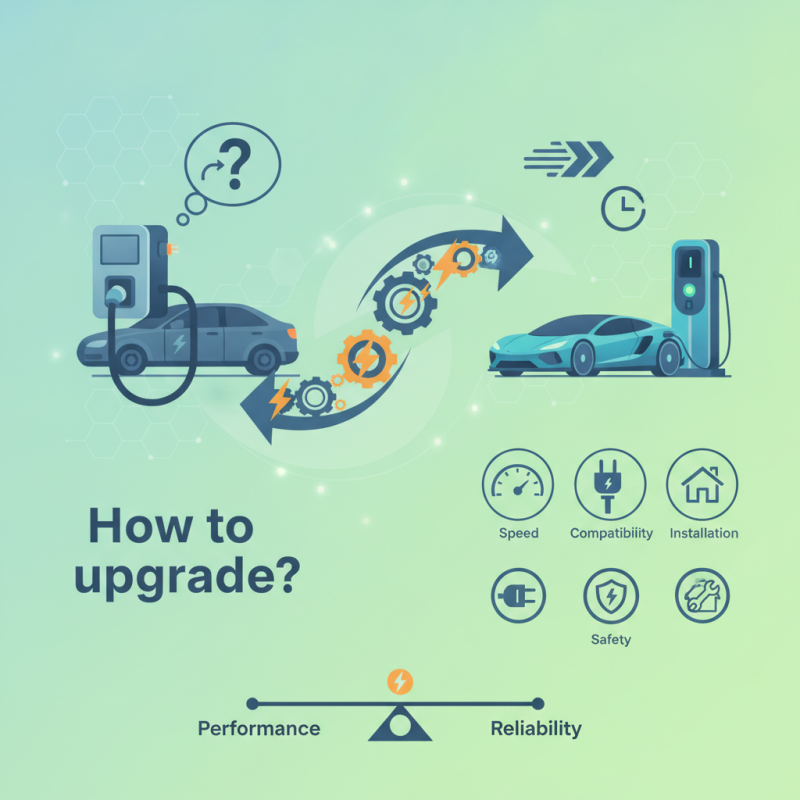
Upgrading your old EV chargers to faster units can seem daunting. However, it's an essential step to keep up with the increasing demands of electric vehicle technology. Many EV owners wonder, "How to upgrade old EV chargers to faster units?" This question is important because faster chargers can enhance your driving experience and reduce downtime.
In today's fast-paced world, convenience is vital. Older charging units may not provide the efficiency you need. Upgrading to faster units allows you to charge your vehicle in less time, ensuring you stay on the go. But it's not just about speed; it's also about compatibility and safety. Choosing the right charger means understanding your vehicle's specifications and the power source available.
Yet, the upgrade process can feel overwhelming. Consider the installation's electrical requirements and potential cost implications. Some may need professional help, while others might attempt a DIY approach. Reflecting on these factors is crucial. The goal is to strike a balance between performance and reliability as you make this significant change.
Upgrading old electric vehicle (EV) chargers is essential in today's fast-paced world. As the EV market grows, faster charging options have become vital. According to a 2022 report by the International Energy Agency, global EV registrations exceeded 10 million, highlighting the need for efficient charging infrastructure. Old chargers often provide insufficient charging speeds, leading to longer waits for users.
Many outdated chargers only deliver a maximum of 3.7 kW. In contrast, newer models can achieve 22 kW or more, drastically reducing charging time. Consumers expect swift, reliable service, which outdated units fail to provide. A survey by the Department of Energy found that 74% of EV owners express frustration with slow charging times. This frustration could be alleviated by upgrading to modern systems.
Additionally, older units may lack compatibility with advanced EV models. Features such as smart charging and user-friendly interfaces are becoming standard. In 2023, projections show that 80% of charging stations will incorporate smart technology. This shift emphasizes the urgency of upgrading old chargers. Failing to do so can lead to reduced user satisfaction and diminish the reliability of charging networks.
When considering upgrading your old EV chargers, selecting the right fast charger is crucial. Fast chargers, typically Level 2 or DCFC, significantly reduce charging time. They can restore up to 80% battery capacity in just 30 minutes. Identifying the ideal charger involves understanding your vehicle's specifications and charging needs.
Look for chargers that offer compatibility with various electric vehicle models. High charging speeds are essential, but also consider future-proofing your investment. Do you plan to own multiple EVs? If so, choose a unit that can support higher wattages. Ensure the installation is done by a qualified professional to maintain safety and efficiency.
One doesn't have to settle for mediocre charging times. Take time to research user reviews and ratings. Many users have expressed frustration over compatibility issues and poor customer service after their purchase. A thorough investigation can help avoid these pitfalls. Remember, a rush to upgrade may lead to disappointment. It's better to take a moment and reflect on your choices.
Upgrading your old electric vehicle (EV) chargers to faster units can significantly enhance your charging experience. Many EV owners find that older models may only provide Level 1 charging, delivering around 4-5 miles of range per hour. In contrast, Level 2 chargers can offer up to 25 miles of range in just one hour. This transition can greatly reduce wait times, especially in busy households.
To safely remove old EV chargers, start by ensuring the power is completely turned off at the panel. You’ll need basic tools such as a screwdriver and wire connectors. Disconnect the wiring cautiously. A common issue arises when users rush through this step, leading to potential hazards. It’s crucial to avoid touching the wires without proper tools. The National Fire Protection Association reports that improper installation can contribute to electrical fires, so diligence is key.
Check your local codes. Different regions have specific requirements for electrical installations. Professional installation is often recommended to ensure compliance with safety standards. Relying on certified electricians can alleviate concerns regarding legal ramifications. According to a recent industry report, improper installations account for nearly 30% of electrical-related accidents, emphasizing the importance of following safety guidelines.
Upgrading to a faster electric vehicle (EV) charger can significantly enhance your charging experience. When installing a new charger, it’s essential to evaluate your home’s electrical capacity first. Check if your electrical panel can handle the increased load. Consulting with a licensed electrician is advisable. They can help ensure safety and compliance with local codes.
Proper placement of the charger matters. Choose a location that is easily accessible. Ensure it is close to your parking area to maximize convenience. A professional installation can help prevent future issues. They can also provide advice on how to optimize your charger’s performance.
Don’t overlook the importance of regular maintenance. Periodically inspect your charger for wear and tear. Look for signs of corrosion or loose connections. Keeping your charger in good condition can prolong its lifespan. However, it’s also vital to be open to learning about new technologies. As EV technology evolves, staying informed will aid in making better choices for your charging needs.
Upgrading to a faster EV charger is a wise move for electric vehicle owners. However, simply installing a new unit is not enough. Proper maintenance ensures your charger operates at peak efficiency. Start by checking connections regularly. Loose wires can lead to slow charging or even damage. Clean the charging port often. Dirt and debris can affect performance.
Using a smart charger can optimize efficiency. These units adjust the charging speed based on your vehicle's needs and battery health. Monitor your charger's usage through an app as well. This allows you to identify patterns. You may find the need for adjustment.
Don’t overlook software updates. Some chargers receive improvements that enhance performance. Read the manufacturer’s guidelines carefully. Not all upgrades will suit your system. Reflect on your charging habits, too. Minimizing peak hour charging can help lower costs and enhance battery life. Each step is a part of maintaining a reliable EV charging experience.
: Look for Level 2 or DC fast chargers. They can quickly restore battery capacity.
A fast charger can restore up to 80% of battery capacity in about 30 minutes.
Check compatibility with various EV models and consider future charging needs.
A qualified electrician ensures safety, compliance, and optimal performance during installation.
Research user reviews and product ratings to inform your purchase decision.
Regularly inspect for wear, corrosion, or loose connections to prolong lifespan.
Evaluate your electrical panel and consult a licensed electrician beforehand.
Choose a location close to your parking area for optimal convenience.
Reflect on your purchase choice and explore other charging options if needed.
Keep learning about advancements to make better choices for your charging needs.
Upgrading your electric vehicle (EV) charger can significantly enhance your charging experience, and understanding how to upgrade old EV chargers to faster units is essential for maximizing efficiency. The first step involves recognizing the need for an upgrade, considering factors such as charging speed, compatibility with your vehicle, and the latest technological advancements. Once you've identified the right fast charger that fits your requirements, you can follow a step-by-step guide to safely remove your old unit, ensuring the process is handled without risks.
After removing the old charger, the installation of the new faster unit requires adherence to best practices, including proper electrical connections and compliance with safety regulations. Finally, to maintain and optimize your new charger for peak performance, regular checks and assessments will help prolong its lifespan and efficiency, ensuring you enjoy the benefits of an upgraded charging solution for years to come.

Greenvora Charger