Electric vehicle charging is becoming ordinary infrastructure, not a niche technology. The International Energy Agency reported more than four million public charging points worldwide by the end of 2023. Public chargers increased by over 40% that year. More plugs also create more exposure to electrical, mechanical, and environmental hazards.
What safety standards apply to EV charging stations depends on location, equipment, and charging speed. In the United States, the National Electrical Code, especially Article 625, addresses EV power transfer systems. UL 2202 covers electric vehicle charging system equipment. UL 2231 focuses on protection against electric shock. UL 2594 applies to electric vehicle supply equipment. International installations may follow IEC 61851 and IEC 62196 requirements. These standards address grounding, insulation, temperature control, connector design, enclosure protection, and communication between vehicles and chargers.
The details matter. A wet cable beside a cracked connector can turn routine charging into a serious incident. A loose terminal may overheat behind a closed cabinet. Small failures become visible only later.
Eric Wood, an electric vehicle charging researcher at the National Renewable Energy Laboratory, has emphasized, “Interoperability is a key issue for the charging ecosystem.” His observation also reveals a weakness: safety depends on systems working together, not merely carrying certification labels. The IEA’s Global EV Outlook 2024 supports this concern, linking reliable charging growth with stronger infrastructure planning and grid coordination. Standards reduce predictable risks, but they cannot replace inspection, maintenance, trained installation, or user awareness. That uncomfortable gap deserves closer examination.
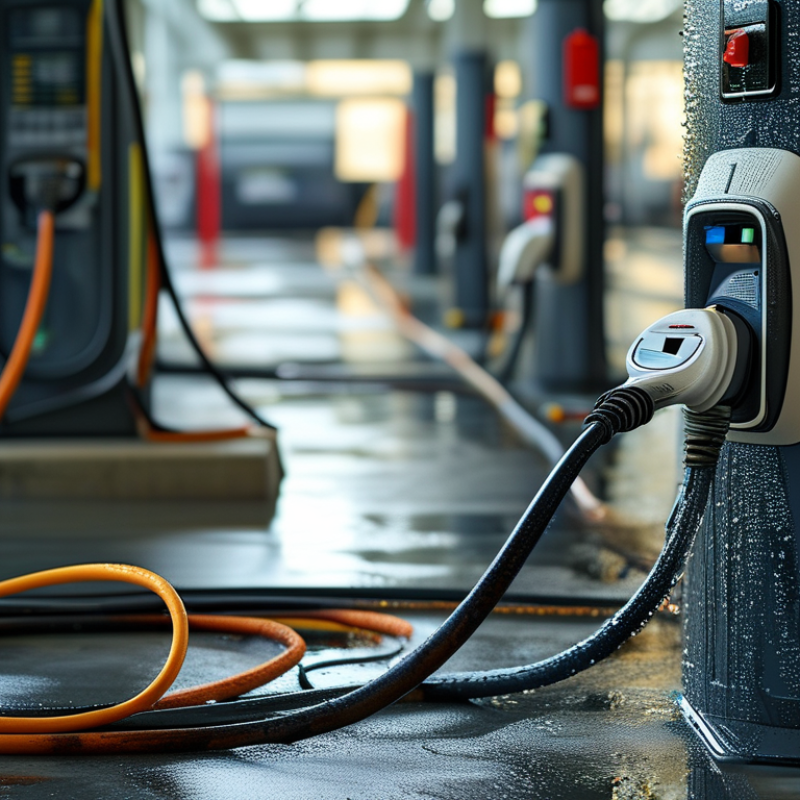
EV charging station safety standards define how charging equipment should be designed, installed, tested, and maintained. They cover electrical grounding, insulation, overcurrent protection, weather resistance, and protection against electric shock. A compliant station should stop or reduce power when it detects leakage, overheating, damaged cables, or abnormal voltage. These safeguards matter in a garage, apartment car park, or roadside location.
Tips: Keep connectors dry and off the ground. Check cables for cuts before charging. Leave airflow around the equipment. Installation should be completed by a qualified electrician and verified against local electrical codes. Operators also need routine inspections, clear warning labels, emergency shutoff access, and records of repairs. A small fault can become serious when rain, dust, and daily vehicle traffic are involved.
Safety standards also address physical design. Cables should not create trip hazards, and equipment must remain stable during use. Enclosures need suitable protection for outdoor conditions. Testing should include normal charging, fault detection, and temperature changes. Standards help, but they are not magic. A checklist can miss poor workmanship or hidden damage. For that reason, trained inspection and honest maintenance reports remain essential. Even a clean-looking station deserves attention.
Electric vehicle charging stations handle high electrical loads, often in public spaces and changing weather. Safety standards address hazards that drivers may not see. The risk is invisible.
Electrical standards require proper grounding, insulation, overcurrent protection, and automatic fault detection. These controls help prevent electric shock, overheating, and arc faults when moisture enters a damaged connector. They also limit charging current when communication between the vehicle and station fails.
Physical hazards receive equal attention. A loose cable can become a trip hazard, while a poorly protected unit may suffer impact from a reversing vehicle. Standards guide enclosure strength, cable placement, emergency shutoff access, and clear warning labels. In outdoor locations, protection against rain, dust, temperature changes, and corrosion becomes essential. A cracked plug after a winter freeze should never be treated as a minor defect.
Fire safety is another concern. Excessive heat may develop inside connectors, terminals, or distribution equipment. Temperature monitoring and scheduled inspections can identify unusual heating before damage spreads. Qualified technicians should check torque, insulation condition, protective devices, and visible wear during maintenance.
Accessibility and human behavior also matter. Controls must remain usable, readable, and reachable, including during an emergency. A checklist can miss a hurried driver forcing a connector into place. Standards reduce that uncertainty, but they cannot replace trained judgment or regular observation. Small gaps matter.
Safety standards protect EV drivers and technicians by controlling risks that are easy to miss. A charging cable may look harmless, yet it can carry high voltage and substantial current. Standards such as IEC 61851 require controlled communication between the vehicle and charger. This helps prevent energizing a connector before a secure connection exists. Grounding, insulation, temperature monitoring, and automatic fault interruption add further protection. The IEA’s Global EV Outlook 2024 reports more than four million public charging points worldwide in 2023. More equipment means more opportunities for installation errors, moisture exposure, and worn components.
Technicians face different hazards. They may open cabinets, test live circuits, or repair equipment after impact. The U.S. Bureau of Labor Statistics recorded 145 fatal occupational injuries involving electricity in 2022. EV charging standards cannot remove every danger, but they define isolation procedures, protective enclosures, labeling, and test requirements. Clear procedures reduce guesswork. That matters during a rushed service call. Still, a standard is not magic. Poor maintenance, damaged cables, and incomplete training can weaken the protection.
Tips: Drivers should stop using a charger with cracked insulation, unusual heat, or repeated fault messages. Technicians should verify de-energization with a suitable meter, inspect grounding, and document failed safety checks. The IEA data shows rapid infrastructure growth, but reliability depends on people following the details. That is where practice sometimes falls short.
| Safety Dimension | Relevant Safety Requirement or Practice | Recognized Standard or Reference | Protection for Drivers | Protection for Technicians | Typical Verification Evidence |
|---|---|---|---|---|---|
| Electrical shock prevention | Protective earthing, insulation, touch-voltage control, and electrical separation are assessed before equipment is placed into service. | IEC 61851 series; IEC 60364-7-722; applicable national electrical codes | Reduces the chance of touching an energized conductive part during normal use. | Provides a defined fault-current path and lowers exposure during inspection and repair. | Earth-continuity, insulation-resistance, polarity, and protective-device tests. |
| Residual-current protection | Charging installations use residual-current protection appropriate to the equipment, including protection against smooth direct-current residual currents where required. | IEC 60364-7-722; IEC 62955 for DC residual-current detection devices used with certain AC charging equipment | Helps disconnect the supply when leakage current creates an electric-shock risk. | Reduces the risk of undetected leakage during fault diagnosis and maintenance. | Trip-time, trip-current, self-test, and DC-residual-current checks, as applicable. |
| Overcurrent and short-circuit protection | Circuit ratings, protective devices, conductor sizes, and charging current settings must be coordinated with the installation design. | IEC 60364-7-722; IEC 61851 series; national installation rules | Limits overheating and helps prevent electrical fires caused by excessive current. | Provides predictable fault-clearing behavior and reduces damage to equipment. | Load calculations, breaker coordination, conductor inspection, and functional trip tests. |
| Controlled energization | The charging system verifies connection and communication conditions before delivering power and stops or limits output when a critical fault is detected. | IEC 61851-1; IEC 61851-23 for DC charging equipment | Prevents the connector from being energized unexpectedly during connection or disconnection. | Supports safer fault isolation and makes abnormal operating states easier to identify. | Pilot-signal checks, connector-lock tests, emergency-stop tests, and fault-response tests. |
| Thermal and fire safety | Equipment enclosures, terminals, cables, and power electronics are selected and tested for expected electrical, thermal, and environmental stresses. | IEC 61851 series; IEC 61439 where low-voltage assemblies are applicable; local fire and electrical codes | Reduces exposure to hot surfaces, melted components, smoke, and fire hazards. | Helps technicians identify thermal limits and service equipment without relying on guesswork. | Temperature monitoring, torque records, thermal inspection, ventilation review, and enclosure checks. |
| Environmental protection | Outdoor charging equipment is designed with suitable protection against water, dust, corrosion, impact, ultraviolet exposure, and temperature conditions. | IEC 60529 for enclosure ingress-protection classification; IEC 61851 series; local environmental requirements | Reduces the likelihood that rain, dirt, or accidental impact will create an unsafe condition. | Preserves enclosure integrity and reduces hidden damage that could appear during servicing. | Enclosure inspection, seal checks, corrosion assessment, and confirmation of the specified IP rating. |
| Cable and connector safety | Connectors and cables are rated for the intended current, voltage, temperature, mechanical use, and charging configuration. | IEC 62196 series; IEC 61851 series; applicable national product requirements | Reduces overheating, connector damage, accidental contact, and trip hazards. | Creates consistent inspection criteria for wear, deformation, contamination, and insulation damage. | Visual inspection, continuity tests, temperature checks, locking checks, and rating confirmation. |
| Emergency shutdown | Clearly identified shutdown or emergency-stop functions are provided where required by the equipment design, installation, or local regulations. | IEC 61851 series; machinery and electrical safety requirements applicable to the installation | Allows power delivery to be stopped quickly during smoke, damage, flooding, or another emergency. | Supports rapid isolation before technicians approach damaged equipment. | Emergency-stop accessibility review and functional shutdown testing. |
| Maintenance and safe work practices | Installations require documented inspection, isolation procedures, labeling, service clearances, and competent-person maintenance. | IEC 60364-6; IEC 60364-7-722; national occupational and electrical safety rules | Keeps charging equipment available and reduces hazards caused by neglected damage or incorrect repairs. | Provides repeatable procedures for de-energization, verification, repair, and return to service. | Inspection schedules, maintenance logs, lockout/tagout records, labels, and commissioning certificates. |
| Communication and fault handling | Charging communication monitors permitted current, operating status, and fault conditions so that power can be reduced or stopped when required. | IEC 61851 series; ISO 15118 where high-level vehicle-to-charger communication is implemented | Helps prevent charging outside the agreed electrical limits and provides clear status information. | Improves fault diagnosis and supports safer testing of control and power functions. | Communication logs, fault-code review, simulated-fault tests, and controlled restart tests. |
Note: Exact requirements vary according to charging mode, system voltage, installation environment, equipment design, and the laws or electrical codes applicable in the installation location.
Electric vehicle charging is not simply a matter of adding a socket to a wall. The International Energy Agency’s Global EV Outlook 2024 reported nearly four million public charging points worldwide by the end of 2023. That rapid expansion increases pressure on electrical networks, installers, and inspectors. Safety rules keep this growth measurable and controlled.
In the United States, NFPA 70, Article 625, addresses electric vehicle power transfer systems, grounding, protection, and installation methods. Equipment must also meet applicable product safety requirements, such as protection against electric shock, overheating, and water exposure. International projects commonly reference IEC 61851 for conductive charging systems and IEC 60364-7-722 for electrical installations supplying vehicles. Local authorities may add requirements for permits, accessibility, emergency shutoffs, and load management.
Installation quality matters as much as equipment design. A qualified electrician should verify conductor sizing, circuit protection, ventilation needs, cable routing, and fault protection before energizing a station. The U.S. Department of Energy’s Alternative Fuels Data Center highlights the importance of inspections and site-specific planning for charging infrastructure. Still, standards cannot predict every site condition. A checklist may miss poor drainage or a damaged cable. That is where field experience matters. Rules are essential, but careful judgment remains imperfect and necessary.
Safe charging depends on more than a working plug. Testing begins before a station serves its first vehicle. Qualified technicians check wiring, grounding, insulation, emergency stops, enclosure seals, and communication systems. They measure voltage and current under controlled loads. They also test fault protection, because hidden leakage can create heat or shock risks. These checks should follow recognized electrical and charging safety standards, not personal guesses.
Maintenance continues after installation. Operators inspect cables for cuts, crushed sections, loose pins, and moisture. They clean contacts carefully and review error logs for repeated faults. Thermal scans can reveal unusual heating before damage becomes visible. Scheduled tests should cover protective devices, software controls, meter accuracy, and physical barriers. Records matter. A dated inspection log helps technicians compare changes and respond before a minor defect grows. Still, no checklist catches everything. Weather and user damage can appear between visits. That uncertainty requires honest attention.
Tips: Keep connectors off wet ground. Stop using damaged equipment. Report heat, burning smells, sparks, or unstable charging immediately. Never bypass a tripped safety device. Ask for inspection dates when managing a shared site. Review near-misses, not only equipment failures. This practice can expose weak procedures, although teams may resist admitting them. That discomfort is useful.
EV charging stations combine high-voltage electricity, outdoor exposure, communication systems, and frequent user interaction. Safety standards require key controls to be tested during commissioning and checked during maintenance.
The chart summarizes commonly verified safety functions referenced by IEC 61851-1, IEC 60364-7-722, and IEC 60529. Ground continuity, residual-current protection, insulation monitoring, overcurrent protection, and enclosure protection help reduce electric-shock, fire, and environmental risks.
Reference note: applicability and test procedures depend on the charger type, installation design, voltage system, and local regulations.
: They cover grounding, insulation, overcurrent protection, weather resistance, and electric shock prevention. Equipment should reduce power during leakage, overheating, or abnormal voltage. Safety rules help, but they cannot replace careful workmanship.
A qualified electrician should install and verify the station against local electrical codes. Poor wiring can create heat, shocks, or repeated charging faults. A clean installation is not automatically a safe one.
Look for cuts, crushed sections, cracked insulation, or loose connector pins. Keep connectors dry and off the ground. Stop immediately if the equipment feels unusually hot or smells burnt.
Grounding, insulation, temperature monitoring, and automatic fault interruption reduce electrical risks. The station should prevent power flow when conditions become unsafe. These systems can fail if damage remains hidden.
Technicians should confirm de-energization with a suitable meter. They should inspect grounding, wiring, enclosure seals, and emergency shutoff access. They also need clear labels and accurate repair records.
Operators should schedule routine inspections and review error logs. Checks should include cables, protective devices, software controls, and meter accuracy. Weather or vehicle damage may appear between inspections.
Warning signs include sparks, burning smells, unstable charging, repeated fault messages, and unusual heat. Damaged cables also require immediate attention. Do not bypass a tripped safety device.
No checklist catches everything. Hidden damage, poor workmanship, and rushed inspections can remain unnoticed. Reviewing near-misses may reveal weak procedures, although teams may dislike that conversation. That discomfort is useful.
EV charging station safety standards establish the technical and operational requirements needed to make charging reliable and secure. They address hazards such as electric shock, short circuits, overheating, fire, moisture, grounding failures, cable damage, and vehicle movement during charging. These standards also define safe voltage levels, protective devices, enclosure strength, emergency shutoff procedures, clear warnings, and accessibility features. By following them, drivers receive safer equipment that is easier to use, while technicians benefit from controlled installation, inspection, and repair procedures.
What safety standards apply to EV charging stations depends on the equipment type, installation location, electrical system, and local regulations. In general, charging equipment must be properly certified, installed by qualified professionals, and tested for insulation, grounding, communication, temperature control, and fault protection. Regular maintenance should include visual inspections, connector checks, software and safety-function verification, cleaning, and prompt replacement of damaged components. Careful documentation and scheduled testing help identify risks early and keep charging stations safe throughout their service life.

Greenvora Charger