Japan is currently at a critical turning point in its Green Transformation (GX) strategy. As a global hub for automotive engineering, the demand for sophisticated EV Charging Management Software (EVMS) has skyrocketed. Factories in Japan are no longer just producing hardware; they are evolving into software-centric ecosystems that integrate power grids with vehicle telematics.
Expert Insight: The Japanese market is unique due to its heavy reliance on the CHAdeMO standard while rapidly adopting OCPP (Open Charge Point Protocol) for global export compatibility. Our software bridges this gap seamlessly.
In regions like Tokyo, Nagoya, and Osaka, the focus has shifted toward Energy-Efficient Load Balancing. This is essential for Japan's dense urban infrastructure where power grid stability is paramount. Exporters from Japan are now leading the way in providing "Smart Grid Ready" software that allows for real-time monitoring and demand response.

Greenvora stands at the forefront of this technological revolution. We adhere to the model of a comprehensive technical enterprise, integrating scientific research, design, manufacturing, and after-sales service. Our commitment to the Japanese market involves specialized energy solutions tailored for both commercial and residential sectors.
With independent development of charging master controllers, we provide customized core master control boards for charging pile enterprises globally. Our ODM partnerships with dozens of large-scale international firms prove our technical dominance.
Our headquarters has secured world-class certifications including DEKRA CB, CE, and ISO9001. As a "High-Tech Enterprise" and "AAA Credit" company, we guarantee reliability that meets the rigorous standards of the Japanese Ministry of Economy, Trade and Industry (METI).

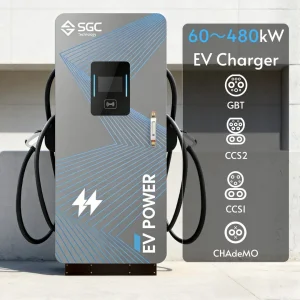
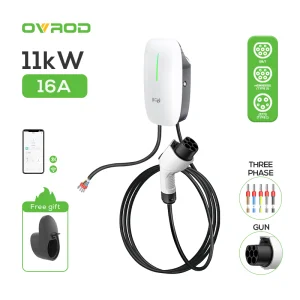
Our proprietary control board architecture supports diverse global standards.
In Tokyo and Nagoya, charging stations are often integrated into high-rise office parking. Our software utilizes Dynamic Load Balancing (DLB) to ensure that EV charging does not exceed the building's peak power capacity, preventing costly infrastructure upgrades.
Government-sponsored roadside stations (Michi-no-Eki) require remote management for unmanned operation. Our OCPP 2.0.1 Smart Cloud platform allows operators in Tokyo to monitor and reset stations located as far as Hokkaido or Okinawa.
With Japan's logistics sector facing labor shortages, automated fleet charging is vital. Our software integrates with delivery schedules, ensuring that electric vans are 100% charged by the start of the morning shift in Saitama or Chiba logistics hubs.
Japan leads the world in V2H technology. Our management software supports bidirectional charging, allowing Japanese homeowners to use their EV battery as a backup power source during typhoons or seismic events.
The next decade of EV infrastructure in Japan will be defined by three major trends:
Ready to revolutionize your EV infrastructure with Japanese-grade software?
Send Inquiry Now & Get Expert Consultation Greenvora Charger