High-efficiency DC fast chargers and solar-integrated stations optimized for the specific voltage profiles and environmental demands of Dominica's public networks.
Dominica, globally renowned as the "Nature Island of the Caribbean," has embarked on a bold path toward becoming the world's first fully climate-resilient nation. Pivotal to this goal is the Climate Resilient Execution Agency for Dominica (CREAD) and national strategies targeted at eliminating dependence on imported fossil fuels. In this context, building a robust network of Public EV Charging Stations is not merely about transportation utility—it is a critical pillar of sovereign national resilience and eco-tourism preservation.
Unlike continental landmasses, SIDS (Small Island Developing States) face hyper-specific deployment conditions. High relative humidity, intense salt-air corrosion, high baseline electricity rates, and vulnerability to severe weather events (such as Hurricane Maria) dictate that typical consumer-grade EVSE units are unfit for purpose. To succeed in Dominica, utility planners and municipal buyers must target commercial chargers built from heavy-duty, marine-grade alloys, configured with intelligent power distribution, and capable of operating alongside local microgrids.
Historically, the Dominica Electricity Services Limited (DOMLEC) grid has relied on diesel generation, making local electricity rates sensitive to global fuel volatility. However, Dominica is strategically developing its geothermal resource at Laudat in the Roseau Valley, aiming to generate clean, baseline geothermal energy that will exceed domestic demands.
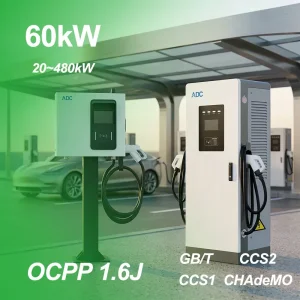
As geothermal capacity integrates with DOMLEC’s network, local EV charging stations must transition from basic current dispensers to dynamic smart-grid nodes. The insertion of high-power DC fast chargers (40kW to 180kW) into radial grid networks can cause voltage drops and high peak demand fees if not correctly managed. Solutions implementing OCPP 1.6J and OCPP 2.0.1 smart profiles allow DOMLEC and facility operators to dynamically cap maximum current limits during hours of system stress, protecting local transformers while ensuring electric utility fleets remain operational.
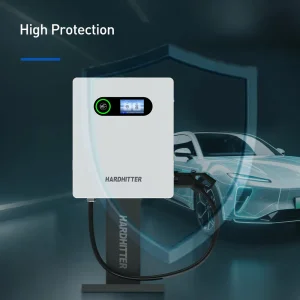
Hardware failure in tropical marine environments is primarily caused by galvanic corrosion and particulate intrusion. Dominica's coastal highways, such as the route between Roseau and Portsmouth, expose charging infrastructure to persistent saline winds. Additionally, sulfur concentrations near volcanic thermal vents require robust chemical protection layers for electronics.
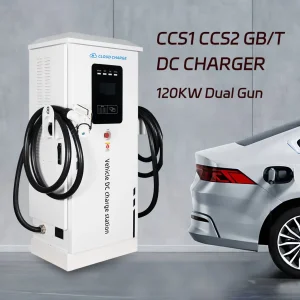
As an industry-leading exporter, our systems deploy military-grade circuit-board coatings (Conformal Coating) alongside double-powder-coated galvanized steel or marine-grade stainless steel enclosures. By maintaining strict IP54 to IP55 ingress protection, we prevent humidity condensing within the high-voltage interior compartments of our 120kW, 160kW, and 180kW DC quick chargers. Internal thermodynamic management systems control active heating and cooling to keep humidity levels low, avoiding premature dielectric breakdown.
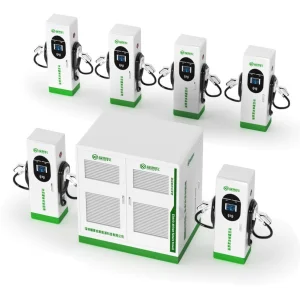
For remote eco-resorts and municipal public spaces far from Roseau's central substations, drawing 100kW+ directly from the local distribution line is often structurally impossible without costly upgrades. The solution lies in solar-integrated EV charging systems (incorporating PV generation and BESS - Battery Energy Storage Systems).
By charging battery buffers with solar power during peak solar noon, public charging infrastructure can deliver high-power DC fast charges to commercial electric vehicles, delivery vans, and rental fleets without drawing directly from DOMLEC's baseline power. This decentralized structure guarantees energy availability even during tropical storm outages, securing vital communication and transport lines when standard refueling systems fail.
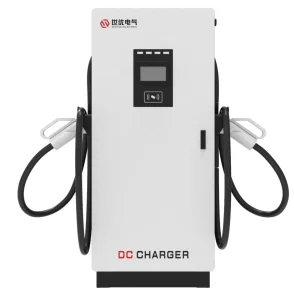
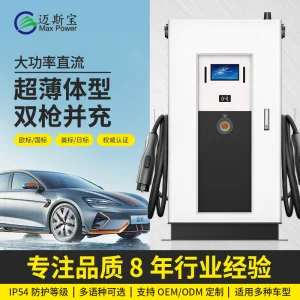
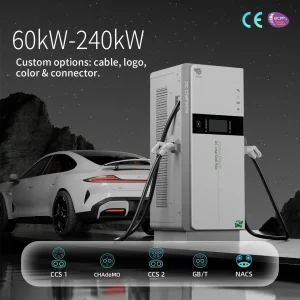
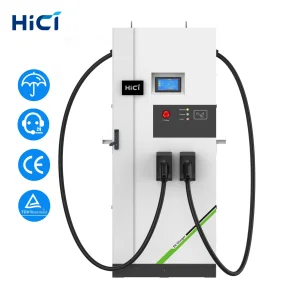
Ultra-fast DC infrastructure designed for logistics depots, public bus lines, and high-frequency charging hubs in urban Dominica.
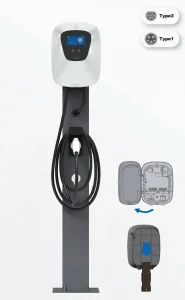
At Greenvora, we adhere to the principle of uniting technical enterprise, scientific research, design, manufacturing, sales, and service in one integrated ecosystem. We specialize in providing comprehensive energy solutions tailored to our customers' local realities. A critical differentiator of our company is our independent development capacity. Through our technological branch Fonsencharge, we design and produce our own proprietary EV charging master control boards.
Having complete control over the motherboard hardware and firmware means we can customize charging profiles and communication stacks for regional operators. For example, if a Caribbean utility requires custom billing protocol integrations, local credit card payment gateways, or special grid-curtailment signals, Fonsencharge can develop and deploy these customizations directly at the firmware level. This level of control is something typical third-party importers simply cannot provide.
Our manufacturing headquarters has secured prestigious international credentials, including DEKRA CB, CE, ISO9001, and certifications as a High-Tech Enterprise and Technology SME. Our commitment to intellectual property protection and research validation is backed by 15 software copyrights, along with multiple invention patents, utility model patents, and design patents. When purchasing from Greenvora, exporters and Dominican operators are partnering directly with the patent-holding manufacturer.
Implementing EV infrastructure in Dominica requires matching charger variants with geographical demographics and local grid segments:
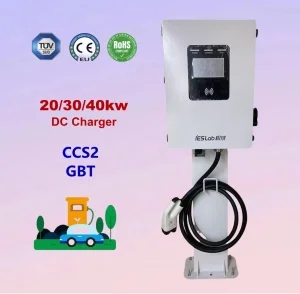
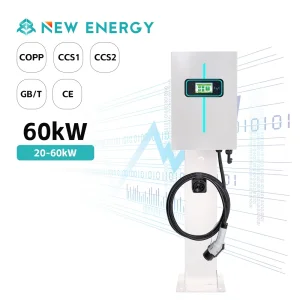
Each system is compliant with international grid codes and supports widespread protocols like CCS2 and GB/T, ensuring compatibility with imports from Europe, North America, and Asian EV markets.
Explore our full line of industrial and commercial solutions, optimized for deployment in Dominica's municipal, resort, and parking sectors.
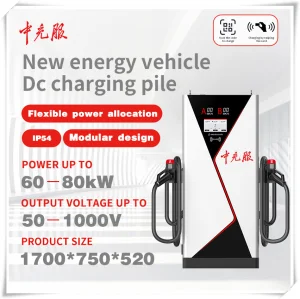
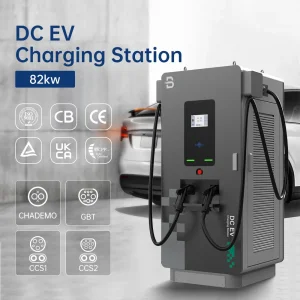
Crucial procurement, engineering, and regulatory questions answered for municipal developers and importing agencies.
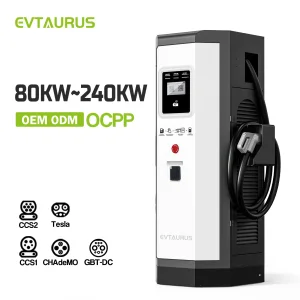
The predominant standard for electric vehicle fleets in the Caribbean region, including Dominica, is the European **CCS Type 2 (CCS2)** standard, alongside the **GB/T** standard for imports from Chinese manufacturers. Our public DC fast chargers (40kW to 180kW) are available in multi-protocol configurations, allowing dual-port systems to charge both CCS2 and GB/T vehicles simultaneously. This guarantees future-proof compatibility as diverse EV brands are imported into Roseau and Portsmouth ports.
Our systems are engineered for maritime environment resilience. The steel components are hot-dip galvanized and finished with double-layer electrostatic polyester powder coatings to achieve high corrosion resistance. Internal PCBA (Printed Circuit Board Assemblies) are protected with advanced silicone conformal coatings, preventing humidity and trace salt deposits from bridging components and causing short circuits. Additionally, the IP55 and IP66 enclosures keep out high rainwater volumes during tropical depressions.
Yes. Built using Fonsencharge’s proprietary mainboards, our EVSE systems natively support **Dynamic Load Balancing (DLB)** and **OCPP 1.6J Smart Charging Profiles**. Through the central management system, station operators or grid managers at DOMLEC can dynamically modulate the maximum amperage output of individual chargers depending on total building demand or grid frequency. This ensures grid stability and protects transformer assets from overloading.
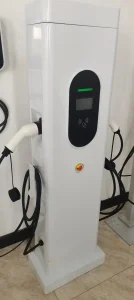
Absolutely. Dominica's standard utility distribution uses a 3-phase system at **400V AC (50Hz)**. Our high-power AC (11kW, 22kW) and fast DC chargers (20kW up to 480kW) are configured to operate stably under these parameters. The internal power conversion stages are designed to tolerate the mild grid voltage fluctuations common in island networks.
Our manufacturing facilities and products hold multiple international certifications, including **DEKRA CB, CE, ISO9001, RoHS, and TUV**. These certifications are widely recognized by Dominica's Bureau of Standards (DBOS) and local engineering regulatory agencies, verifying that our equipment conforms to all safety and operations criteria.
Because we develop the core master control board technology in-house, we can easily adapt the hardware's firmware, communication protocols, and display interfaces to match local projects. Whether you require branding integration, customized local mobile payment APIs, custom RFID management systems, or specific hardware monitoring features, our engineering team can build it to order.
Connect with our export engineering team to receive complete datasheets, compliance documentation, and project-specific pricing for Dominica's municipal, commercial, and resort developments.
 Greenvora Charger