Flagship rapid-response direct-current (DC) power units, high-efficiency AC modules, and intelligent fleet chargers built for seamless emergency interoperability.




As global electric vehicle (EV) penetration accelerates toward mass adoption across passenger, commercial, and municipal fleets, the vulnerability of static grid-tied charging infrastructure during critical operational failures, extreme weather events, grid instability, and remote stranded-vehicle scenarios has emerged as a bottleneck. Emergency EV Charging Systems—comprising specialized Mobile Energy Storage Systems (MESS), ultra-compact roadside DC fast recovery units, vehicle-to-vehicle (V2V) rapid energy transfer systems, and heavy-duty industrial auxiliary power units—form the operational bedrock of transport resilience.
Engineering these high-uptime systems requires a structural departure from conventional stationery charger design. Stationary chargers rely on predictable AC grid interconnects, low mechanical vibration thresholds, and stable ambient operating environments. Conversely, emergency EV charging systems must deliver robust direct-current fast charging (DCFC) under extreme environmental variables, wider input voltage fluctuations, severe mechanical impact, and complex multi-protocol handshakes (CCS1, CCS2, GB/T, CHAdeMO, and NACS/SAE J3400) without relying on permanent grid connections.
Greenvora adhere to the technical enterprise, scientific research, design, manufacturing, sales and service in one, We specialized in providing system energy solutions for customers.

Through holistic vertical integration—from power module topology design to final enclosure weatherproofing—our manufacturing ecosystem delivers enterprise-grade emergency energy solutions tailored for global OEMs, utility operators, roadside service providers, and municipal emergency response fleets.
By controlling every tier of production within our specialized Chinese manufacturing facilities, we eliminate component incompatibility, lower parasitic thermal losses, and guarantee complete compliance with international safety and communication protocols.
The operational brain of any high-reliability EV charger lies in its main controller hardware. Emergency conditions demand instant protocol translation, robust dynamic load balancing, multi-channel CAN bus stability, and flawless isolated communication with diverse battery management systems (BMS).
With the independent development ability of charging master, Fonsencharge can provide customized core master control board for charging pile enterprises. At the same time, the company has formed cooperation with dozens of large charging pile related enterprises at home and abroad in the ODM field and achieved excellent results.
Our proprietary master control boards integrate ARM Cortex-M4/M7 dual-core processors, real-time operating systems (RTOS), hardware-based cryptographic security chips for ISO 15118 Plug & Charge compliance, and native support for OCPP 1.6J and OCPP 2.0.1 protocols.
Whether deploying low-noise night-mode chargers, ultra-fast 480kW liquid-cooled stacks, or compact 20kW mobile rescue modules, our customizable board architectures provide white-label partners with unrivaled time-to-market speed and technical flexibility.

Headoffice has obtained multiple certifications such as DEKRE CB, CE, ISO9001, high-tech enterprise, technology SMEs, quality management system, AAA credit, etc; and has won 15 software copyrights, multiple invention patents, utility model patents and design patents.
Exploring the evolution of off-grid mobile power, high-voltage battery storage, and dynamic AI-driven dispatch.
Transitioning from diesel-generator-backed emergency chargers to zero-emission, high-density LFP (Lithium Iron Phosphate) and Solid-State Mobile Energy Storage Systems. Integrated with 800V silicon carbide (SiC) converters, these mobile units provide up to 500kWh of off-grid energy for high-speed highway rescue operations.
Unlocking direct DC-to-DC energy transfer between service vehicles and stranded passenger EVs or commercial trucks. By bypassing AC conversion stages entirely, V2V emergency units achieve energy transfer efficiency levels exceeding 97% while drastically reducing vehicle payload weight.
Integrating cloud-based machine learning algorithms into master controllers to evaluate real-time battery degradation, optimize thermal management protocols during high-ambient recovery operations, and dynamically route roadside emergency units via predictive traffic modeling.
Global emergency EV charging deployment demands strict quality control, rapid turn-around, and absolute cost-efficiency. China’s advanced EV charging supply chain ecosystem provides unmatched manufacturing and scaling advantages for international partners:
From internal high-frequency transformer winding and precision SMT PCB assembly to heavy-metal IP65 enclosure fabrication, our localized cluster model minimizes lead times for custom 20kW-480kW charger production to under 14 working days.
Direct technical integration with premier Chinese cell manufacturers (CATL, EVE, BYD) and power semiconductor foundries ensures high-voltage LFP batteries and SiC/IGBT modules are engineered to exact automotive-grade reliability parameters.
Every emergency charger undergoes full-load continuous burn-in testing, thermal chamber cycling (-40°C to +75°C), high-pressure water jet ingress validation, and simulated seismic vibration stress tests prior to international dispatch.
Tailored operational configurations engineered for specific roadside, industrial, and disaster resilience needs.
Deployed inside emergency roadside service vans equipped with compact 30kW-60kW mobile DC fast chargers. Allows rescue operators to provide a stranded electric vehicle with 20–30 km of range within 10–15 minutes, enabling safe transit to the nearest static charging hub without expensive towing logistics.
Designed for last-mile delivery fleets (e.g., e-vans, e-trucks) facing grid brownouts or transformer capacity bottlenecks during peak shift changes. Portable 120kW-240kW dual-gun DC chargers with OCPP smart queueing ensure mission-critical vehicles complete scheduled distribution routes without delay.
In municipal emergencies, floods, or grid failures, trailer-mounted or containerized Mobile Energy Storage Systems (MESS) function as dual-purpose infrastructure: powering emergency command hubs while simultaneously rapid-charging emergency service EVs.
For heavy electrification in non-grid-connected regions, ruggedized IP65 DC chargers paired with microgrid solar-plus-storage skid units provide continuous heavy-equipment powering under extreme dust and ambient temperature conditions.
The global transition to electrification has moved past early adopters into heavy commercial transportation, public transit, and industrial utility fleets. However, legacy grid infrastructure in North America, Europe, and Asia-Pacific often lacks the immediate capacity to support multi-megawatt depot connections. Consequently, C&I operators are increasingly investing in mobile and emergency fast-charging infrastructure to guarantee operational continuity.
Regulatory mandates such as the European Union’s Alternative Fuels Infrastructure Regulation (AFIR) and the U.S. National Electric Vehicle Infrastructure (NEVI) program require strict uptime targets exceeding 97%. Incorporating modular emergency chargers into commercial depot fleets acts as an essential insurance policy, shielding fleet operators from contractual penalties caused by unexpected grid outages or hardware maintenance downtime.
From low-noise residential DC stations to scalable megawatt-ready modular power chargers for public and industrial infrastructure.


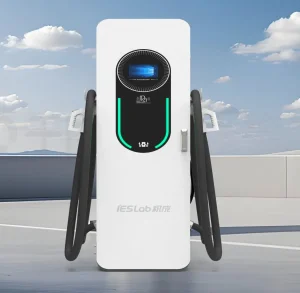
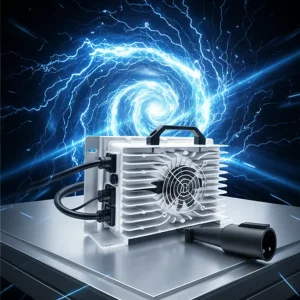
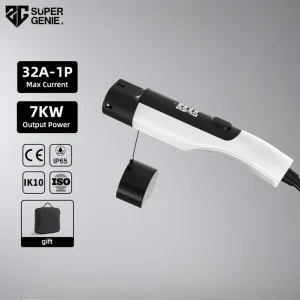

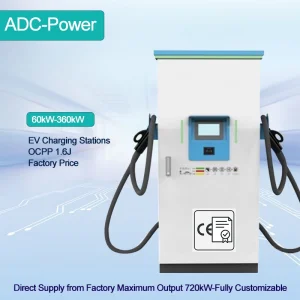

Deploying emergency charging systems globally requires absolute adherence to strict regional electrical safety standards, electromagnetic compatibility guidelines, and software interoperability frameworks. Our factory export models are fully tested and certified by recognized global bodies:
Expert answers regarding emergency EV charging deployment, factory customization, and international compliance.
 Greenvora Charger