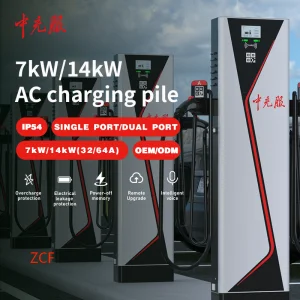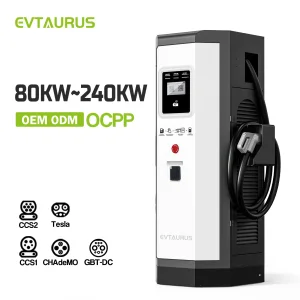
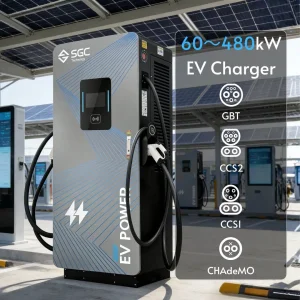
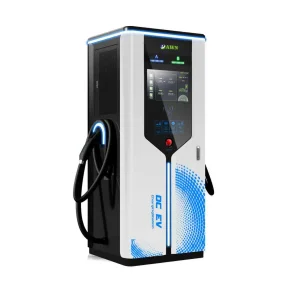
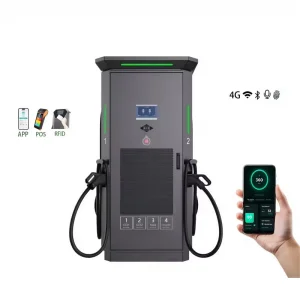
As a global pioneer in the EV energy domain, Greenvora operates a fully integrated model uniting scientific research, industrial design, high-precision manufacturing, international sales, and long-term lifecycle services. We specialize in developing holistic micro-grid and energy supply architectures, delivering systems that bridge the gap between volatile utility feeds and advanced electric vehicle batteries.
Our core technological advantage lies in Fonsencharge, our dedicated R&D division possessing independent development capabilities for high-density charging master controllers. By designing and fabricating specialized mainboards in-house, we supply both standard configurations and fully customized control modules to hundreds of charging pile assemblers worldwide. This strong ODM foundation allows our partners to implement unique firmware logic, dynamic thermal thresholds, and proprietary communication layers on robust, field-tested electronic hardware.

The global transition toward high-density mobility infrastructure has highlighted the limitations of traditional, heavy charging hardware. Large, copper-heavy power transformers and thick, non-flexible liquid-cooled cabling require significant site preparation, civil works, and grid upgrades. Consequently, modern grid operators and commercial businesses are prioritizing lightweight EV charging equipment. By integrating next-generation semiconductor topologies and advanced thermal materials, lightweight systems achieve up to 40% reduction in weight and 35% reduction in cabinet size compared to older configurations.
In North America, Europe, and the Middle East, city planners and commercial fleet operators face strict spatial limitations and weight-bearing caps in multi-story parking structures and historical street settings. Modular, lightweight chargers allow wall-mounting and compact pole-mounting without structural reinforcement, accelerating installation times. These systems support higher power outputs while decreasing overall materials footprint, directly lowering freight costs, labor overhead, and total cost of ownership (TCO) for global distributors.
Lighter chassis and optimized internal configurations bypass the need for crane deployments or heavy concrete foundations during installation.
Utilizing Silicon Carbide (SiC) and Gallium Nitride (GaN) switching components to minimize heat emission and passive component footprint.
Lighter equipment reduces shipping volume and weight, optimizing ocean and land freight container efficiency by up to 28%.

At the core of every lightweight charger is the electronic mainboard. Fonsencharge's proprietary master control boards integrate measurement, communication, billing, protection, and cooling control onto a single multi-layered PCB. By removing redundant wiring looms, connectors, and auxiliary circuit cards, we eliminate common points of hardware failure while reducing electromagnetic interference (EMI).
These control boards feature high-performance dual-core microcontrollers that handle active load balancing, insulation monitoring, and real-time communication protocols (OCPP 1.6J and OCPP 2.0.1). This integrated intelligence enables features like plug-and-charge (ISO 15118), dynamic phase switching (supporting transition from single-phase to three-phase charging based on solar output), and advanced cybersecurity measures for municipal payment networks.
Moving away from Silicon IGBTs to high-frequency SiC MOSFETs, cutting thermal losses by 60% and shrinking magnetics by half.
Deploying bidirectional DC-DC controllers (like our 20kW module) to enable fleet batteries to feed power back into commercial micro-grids during peak demand pricing.
Implementing dynamic matrix charging algorithms in local firmware, allowing master units to split energy across up to 8 auxiliary dispensers based on vehicle state-of-charge (SoC).
Electric vehicle charging needs vary significantly based on vehicle profiles, grid capacity, and geographical environments. We design specific system architectures to resolve these localized constraints:
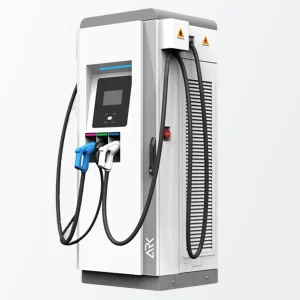
In high-density parkades, power allocation is limited by the facility's main switchboard capacity. Greenvora's 22kW Networked EV Charging Stations address this using local dynamic load management (DLM). If 10 chargers are active but total capacity is limited, our controllers coordinate with each other over Ethernet or WiFi to distribute the load, avoiding peak demand surcharges and circuit overload.
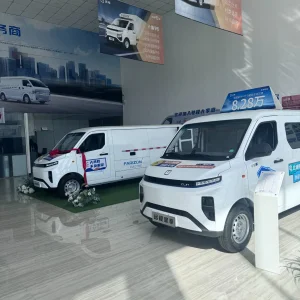
In mountainous, high-altitude, or mining settings, EV battery thermal runaway risks increase during steep climbs and rapid regenerative braking. Solutions like the V6e Mountain Climbing EV Geely 45° Slope Adaptive Power System manage power output to prevent overheating under sustained load. Our chargers pair with these adaptive vehicle power systems, supplying high-input DC power while monitoring battery temperature curves via the CAN bus to adjust current dynamically.
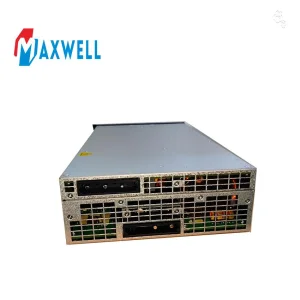
For areas without sufficient grid capacity to support ultra-fast 120kW–400kW chargers, we deploy the 20kW Bidirectional DC-DC Power Supply Unit integrated with a stationary battery bank. The battery storage system charges continuously from the low-power grid. When an EV plugs in, the battery system delivers high-current fast charging through the DC dispenser, minimizing local grid strain.
Our Fonsencharge engineering team develops custom master control boards, housing designs, and unique software firmware tailored to your local grid codes, certification requirements, and billing APIs.
Consult with an R&D DirectorAnswers to key questions from B2B distributors, charge point operators (CPOs), and system integrators regarding lightweight hardware architecture.
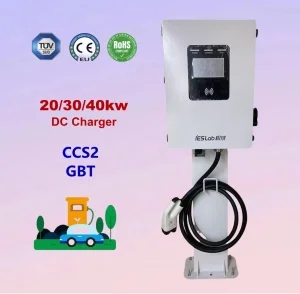
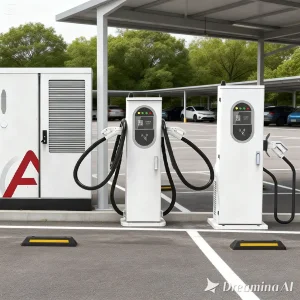
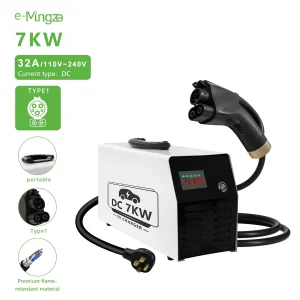
 Greenvora Charger