Engineered for commercial hubs, logistics yards, and rapid transit networks across major Sudanese development corridors.
Sudan's transport and industrial sectors are undergoing a structured pivot toward electric mobility, driven by the volatile costs of liquid petroleum products and the strategic mandate for fuel security. Establishing high-uptime Level 3 DC fast charging networks is a primary cornerstone of this macro transformation, enabling corporate logistics fleets, regional mining enterprises, and national public transit networks to deploy electric vehicles (EVs) at scale.
Deploying electric vehicle infrastructure in East Africa presents specific geographical challenges. Level 3 DC charging systems in Sudan must be built to withstand severe environmental stress: intense ambient dust storms (haboobs), sustained summer temperatures exceeding 45°C, and localized grid instability. In response to these conditions, industrial projects in Khartoum, Port Sudan, and key agricultural nodes along the Nile require specialized fast chargers equipped with intelligent thermal management, rugged enclosures, and flexible solar-coupling technologies.
Integrated cooling systems prevent derating up to 50°C ambient temperatures, key for northern desert environments.
Built-in voltage surge protectors, dynamic grid load balancing, and wide voltage fluctuation input tolerances.
Hermetically sealed modular chambers block airborne dust, sand particles, and moisture infiltration.
Compatible with localized industrial solar PV arrays and battery energy storage systems (BESS) for off-grid operation.
Sudan's industrial sector faces a unique dual challenge: high operational costs for heavy diesel fleets combined with localized grid reliability limitations. In urban transport corridors like Omdurman, Khartoum, and Bahri, commercial operators are actively replacing internal combustion engine vehicles with commercial electric platforms. High-power Level 3 DC fast chargers are critical to this transition, delivering charging cycles in under 30 minutes to minimize vehicle downtime.
A key focus for Sudanese EV implementation is the deployment of localized microgrid charging stations. By coupling our Level 3 DC fast chargers directly with solar photovoltaic (PV) arrays and battery energy storage systems (BESS), operators can establish stable charging hubs independent of the national grid. This solar-to-EV model is highly relevant in remote mining regions and agricultural processing hubs, where off-grid operations are standard.
Combining solar power with DC fast charging reduces conversion losses by keeping energy in DC form from the PV panels directly to the EV battery, bypassing the AC grid. This setup lowers operational costs and reduces thermal stress on charging station electronics in high-temperature environments.
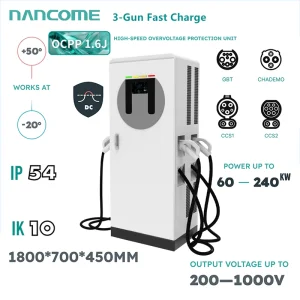
Our line of Level 3 DC fast chargers supports international protocols, including CCS1, CCS2, and GB/T standards. This compatibility allows fleet operators in Port Sudan to service varied vehicle shipments arriving from Europe, China, and dynamic Middle Eastern markets. The equipment features active power module redundancy: if one module goes offline, the charger adjusts output dynamically to maintain operation at lower power, preventing complete system outages.
| Performance Metrics | Technical Specification Details | Sudan Market Suitability |
|---|---|---|
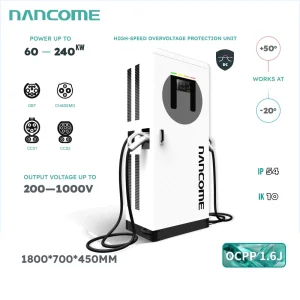
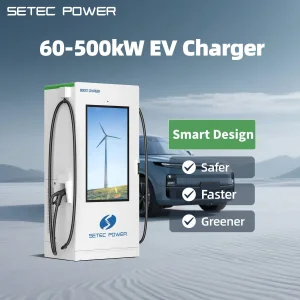
| Power Configurations | 20kW to 400kW (Liquid-Cooled / Air-Cooled) | Supports heavy trucks, transit buses, and municipal fleets. |
| Working Voltage Range | 150V DC - 1000V DC (High-voltage ready) | Fully compatible with next-gen EV battery architectures. |
| Cooling Technology | Isolated internal air ducting & optional liquid cooling | Maintains maximum power output up to 50°C ambient temperatures. |
| Ingress Protection | IP54 rated (dust-tight, high moisture protection) | Protects internal circuitry from sandstorms and monsoon humidity. |
| Protocols & Software | OCPP 1.6J / OCPP 2.0.1 / Smart Load Balancing | Enables remote grid monitoring, billing integration, and fleet tracking. |
Global procurement teams and local contractors operating in Sudan look for specific, proven qualities when evaluating charging infrastructure partners:
Talk with our engineering experts today to receive custom drawings, electrical layout plans, and pricing for your specific industrial project in Sudan.
Send Inquiry NowDelivering certified, globally proven EV charging hardware backed by professional engineering, patent-protected technologies, and customizable control architectures.
Greenvora integrates scientific research, industrial design, manufacturing, sales, and aftermarket engineering services into a unified system energy solution for our global clientele. We focus on providing complete grid-to-vehicle power solutions designed for complex operating environments.
With dedicated control motherboard development capabilities, Fonsencharge designs and manufactures customized core control boards for next-generation charging stations. We collaborate with dozens of major global EVSE enterprises, delivering reliable ODM and OEM systems that perform in high-stress, high-temperature climates.
Our parent manufacturing division has secured multiple key safety and quality certifications, including DEKRA CB, CE, ISO9001, and has been recognized as a National High-Tech Enterprise. We hold over 15 registered software copyrights and numerous patents for invention, utility, and structural designs, ensuring our technical solutions remain stable and compliant.
Explore our complete selection of commercial DC fast charging cabinets, public charging stations, and flexible smart AC solutions.
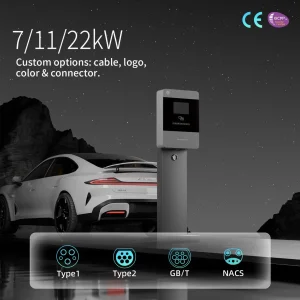
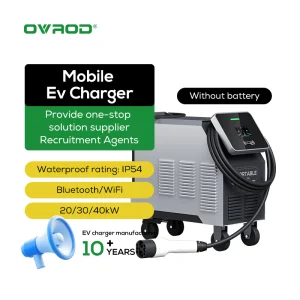
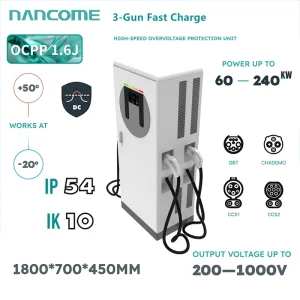
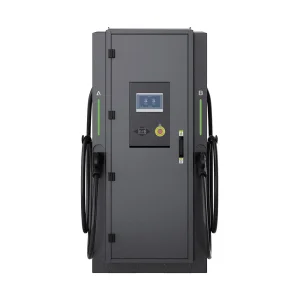
Building reliable EV charging stations in Sudan requires careful engineering to manage the local climate and dust. Standard chargers designed for moderate climates can fail prematurely when exposed to intense heat and sand storms. We address these conditions by integrating specialized engineering adaptations directly into our Level 3 DC chargers:
Sudanese dust storms (haboobs) carry fine sand that can quickly settle on high-voltage circuit boards. To prevent issues, our cabinets are built with a split-chamber design. The power modules are housed in an isolated compartment, keeping the cooling air and external dust completely separate from the sensitive control electronics.
We use washable, heavy-duty air filter media at all entry grilles. These filters can be cleaned during regular maintenance, helping to protect internal parts and maintain efficient cooling performance over time.
When temperatures exceed 40°C, typical power electronics will reduce charging output to prevent overheating. Our Level 3 DC fast chargers use custom cooling systems and heat sinks designed to maintain stable power delivery even in high temperatures.
By optimizing internal airflow and using high-grade magnetic components, our chargers can run at full capacity up to 45°C ambient temperature. Beyond this threshold, the system dials back power output gradually instead of shutting down completely, ensuring drivers can still get a charge.
Contact our technical sales team for comprehensive documentation, customs compliance protocols, and bulk purchase quotes for commercial EV charging installations.
Send Inquiry NowHelping procurement managers, electrical contractors, and fleet operators navigate the details of importing, installing, and running Level 3 DC fast chargers in Sudan.
 Greenvora Charger