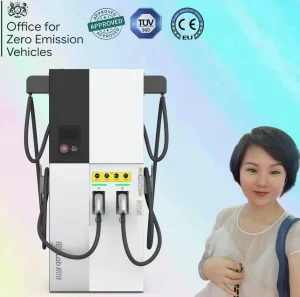
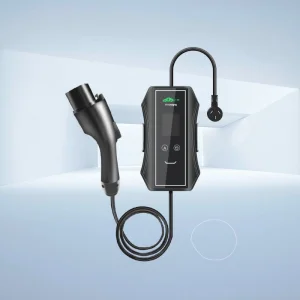
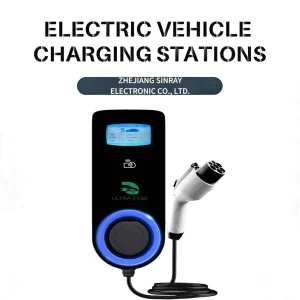
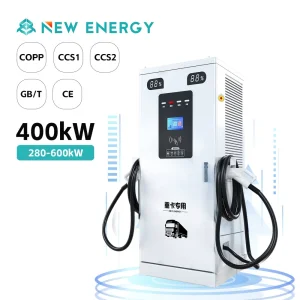
The electrification of global transport networks is progressing at an exponential rate. Fleet operators, municipal transit authorities, industrial logistics centers, and public charging network developers are shifting their strategies toward high-output, intelligent EV charging systems. Finding a trustworthy China wholesale rapid charge EV solutions supplier has become critical for enterprises aiming to manage total cost of ownership (TCO) while deploying future-proof charging grids.
This whitepaper addresses the technical frameworks, grid-integration systems, and financial strategies for B2B procurement managers worldwide. As large-scale heavy-duty fleets and long-haul electric vehicles enter mainstream operations, standard alternating current (AC) charging systems no longer suffice. Industrial stakeholders require rapid direct current (DC) fast-charging infrastructure, capable of delivering power scaling from 60kW up to mega-watt-level charging, coupled with smart power allocation and robust safety features.
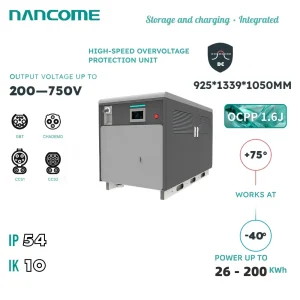
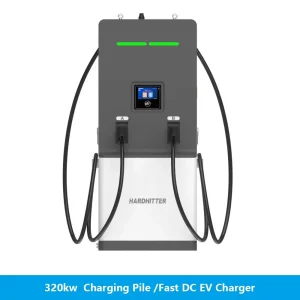
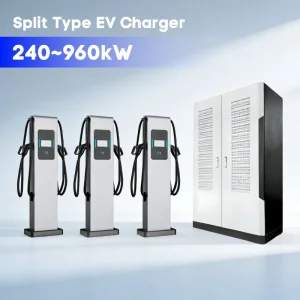
Deploying liquid-cooled split charging architectures from 360kW up to 960kW for heavy duty logistic vehicles.
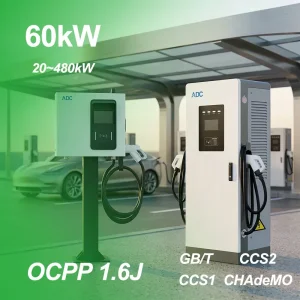
Seamless management via open charge point protocol (OCPP 1.6J/2.0.1) for grid integration and billing.
Equipped with Type B RCD, 6mA DC fault current interruption, and structural surge protection filters.
Greenvora adhere to the technical enterprise, scientific research, design, manufacturing, sales and service in one, We specialized in providing system energy solutions for customers.
With the independent development ability of charging master, Fonsencharge can provide customized core master control board for charging pile enterprises. At the same time, the company has formed cooperation with dozens of large charging pile related enterprises at home and abroad in the ODM field and achieved excellent results.
Headoffice has obtained multiple certifications such as DEKRA CB, CE, ISO9001, high-tech enterprise, technology SMEs, quality management system, AAA credit, etc; and has won 15 software copyrights, multiple invention patents, utility model patents and design patents.


As an industry leader in EV hardware engineering, our R&D efforts focus on hardware reliability and firmware flexibility. The core control board developed by Fonsencharge acts as the "brain" of the entire charging unit. It handles critical safety computations, executes load balancing algorithms in real-time, coordinates communications with vehicle battery management systems (BMS), and communicates with upstream cloud management servers via secure web sockets. This vertical integration allows us to supply global distributors with robust, customizable OEM and ODM solutions that conform to regional protocols.
Software Copyrights
CB & CE Certified
Max Output Power
Custom Control Boards
Corporate buyers face unique challenges when scaling charging infrastructure. Unlike residential solutions, commercial and industrial applications must operate continuously with high reliability. Below are the key considerations for B2B procurement in various sectors:
For public charging operators, maximizing uptime and fast vehicle turnover are primary goals. Operators need scalable DC solutions (ranging from 60kW to 240kW) with flexible payment integrations and secure OCPP connections. This enables smooth communication with modern mobile apps and local grid utility systems, helping to manage peak demand charges.
Fleet operations run on tight schedules. If a truck isn't moving, it's losing money. This makes Level 3 charging systems essential, delivering high-output power to large battery packs in short timeframes. Using split-system configurations with dynamic load management allows fleet depots to distribute power intelligently across multiple vehicles simultaneously, ensuring they are ready for their next route.
Mining projects, agricultural facilities, and remote outback transport hubs often have limited grid access. For these applications, integrating solar generation with battery energy storage systems (BESS) provides a reliable, self-sufficient charging solution. This hybrid approach helps companies maintain operations independent of grid constraints.
Our engineering team focuses on developing efficient, high-performance power electronics. The technology roadmap for our rapid charge EV systems centers on several key innovations:
We are transitioning our internal power converters from traditional Silicon IGBTs to Silicon Carbide (SiC) MOSFET designs. SiC technology offers distinct advantages:
Standard DC chargers often supply fixed power outputs, which can lead to inefficiencies when vehicles have varying charging profiles. Our split-type charging systems solve this by sharing power dynamically. A single central power cabinet (e.g., 480kW or 720kW) distributes energy to multiple user terminals based on real-time vehicle demand. This dynamic sharing maximizes overall utility and prevents grid overloads.
The future of fleet charging lies in vehicle-to-grid (V2G) integration. Adhering to the ISO 15118-20 protocol, our systems are designed to support bidirectional power transfer. This allows electric vehicle fleets to act as mobile energy storage systems, feeding power back to the facility or grid during peak demand periods to support local grid stability.
Safety is a fundamental requirement in our hardware design. Our products are engineered to comply with strict international regulatory and electrical safety standards:
Integrated Type B RCD (30mA AC / 6mA DC leakage protection) prevents electrical hazards for operators and equipment.
NEMA 3R / IP54 ratings with specialized UV protective coatings ensure reliable operation in harsh outdoor climates.
Compliance with DEKRA CB, CE, CSA, ETL, and GB/T standards supports direct deployment across Europe, the Americas, and Asia.
Each charging system undergoes rigorous testing before shipment, including high-voltage insulation tests, thermal stress testing, and functional communication checks with simulated vehicle controllers. Our ISO9001-certified production facility utilizes advanced automation to maintain consistent product quality and reliable performance.
 Greenvora Charger