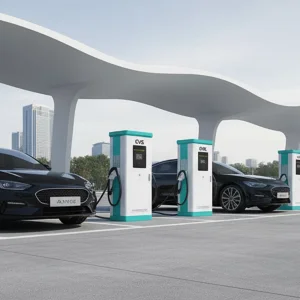
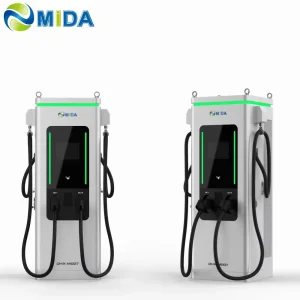
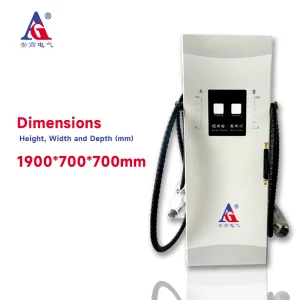
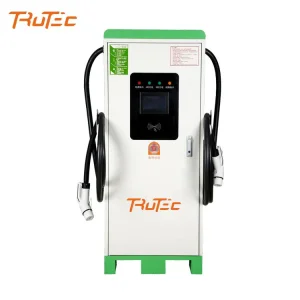
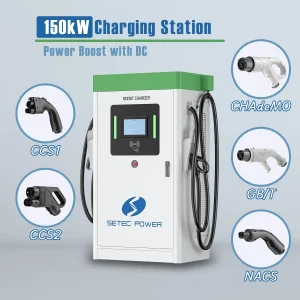
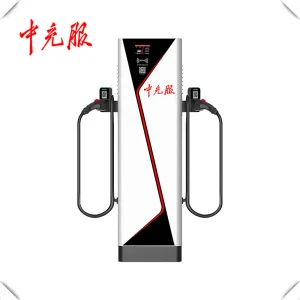
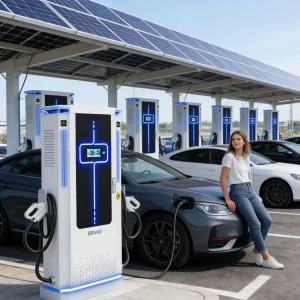
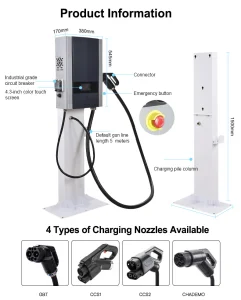
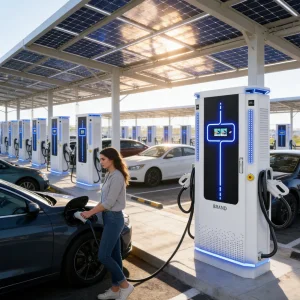
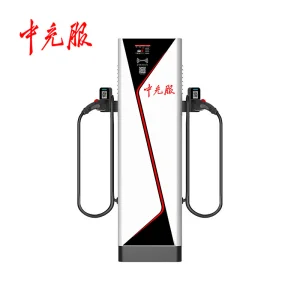
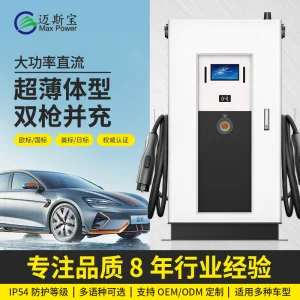
As the transportation sector decarbonizes, the demand for Ground Mounted DC Chargers has transitioned from a luxury to a critical utility. Global logistics hubs, municipal bus fleets, and highway service operators are moving away from slower AC alternatives to ultra-fast DC stacks ranging from 60kW to 480kW. The "Level 3" charging standard is now the baseline for commercial viability in North America, Europe, and Southeast Asia.
Modern DC chargers leverage Silicon Carbide (SiC) technology to achieve conversion efficiencies exceeding 96%. Ground-mounted units offer superior thermal management compared to wall-boxes, allowing for continuous high-current delivery without throttling. This is essential for heavy-duty industrial applications where uptime is the primary ROI metric.
China remains the epicenter of EV supply chain innovation. Chinese factories offer a unique vertical integration advantage—from power module R&D to final assembly. This leads to 30-40% lower TCO (Total Cost of Ownership) while maintaining compliance with international standards like CE, TUV, and UL. The speed of iteration in China allows for the rapid deployment of liquid-cooled and V2G (Vehicle-to-Grid) compatible systems.
A ground-mounted DC charger is more than just a power source; it is a sophisticated energy management node. Our systems integrate advanced grid-sensing technologies to ensure stability during peak demand.
Unlike monolithic designs, our 120kW-240kW stations utilize hot-swappable 20kW/30kW power modules. If one module fails, the station remains operational at reduced capacity, drastically reducing maintenance downtime and on-site repair costs.
This "lego-style" scalability allows operators to start with a 60kW footprint and upgrade to 120kW or 180kW as fleet demand grows, without replacing the entire foundation or enclosure.
Logistics companies utilizing electric vans require rapid turnaround. Ground-mounted units with Dual-Gun Dynamic Load Balancing can charge two vehicles simultaneously, intelligently allocating power based on the Battery Management System (BMS) request of each vehicle.
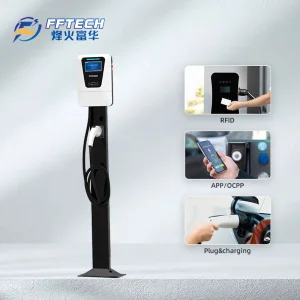
For highway charging, user experience is paramount. Integrating RFID, QR Payment, and OCPP 1.6J/2.0.1 protocols ensures seamless roaming across different network providers, backed by sunlight-readable 7-15 inch HMI touchscreens.
Greenvora adheres to the technical enterprise model, integrating scientific research, design, manufacturing, sales, and service. We specialize in providing comprehensive system energy solutions tailored to the diverse needs of global clients. Whether it is a standalone commercial unit or a multi-node charging park, our expertise ensures a seamless transition to electric mobility.
With the independent development ability of charging masters, Fonsencharge provides customized core master control boards for charging pile enterprises. This "under-the-hood" expertise is why dozens of large charging pile related enterprises at home and abroad choose us for ODM partnerships.
Our head office has secured elite certifications: DEKRE CB, CE, ISO9001. We are recognized as a high-tech enterprise and technology SME, boasting 15 software copyrights and multiple invention patents in thermal management and power conversion.


Bidirectional charging allows EVs to act as mobile batteries, feeding power back into the grid during peak loads. Our R&D is currently focusing on ISO 15118-20 compliance to support these future smart-grid requirements.
As we push toward 400kW+ "Megawatt" charging, air cooling reaches its physical limits. Liquid-cooled cables allow for lighter, thinner charging handles that can safely carry 500A+ currents without overheating.
By using machine learning to analyze voltage ripples and temperature spikes, our cloud platform predicts module failure before it happens, shifting from "reactive" to "predictive" maintenance.
 Greenvora Charger